

By Etienne Mainimo Mengnjo
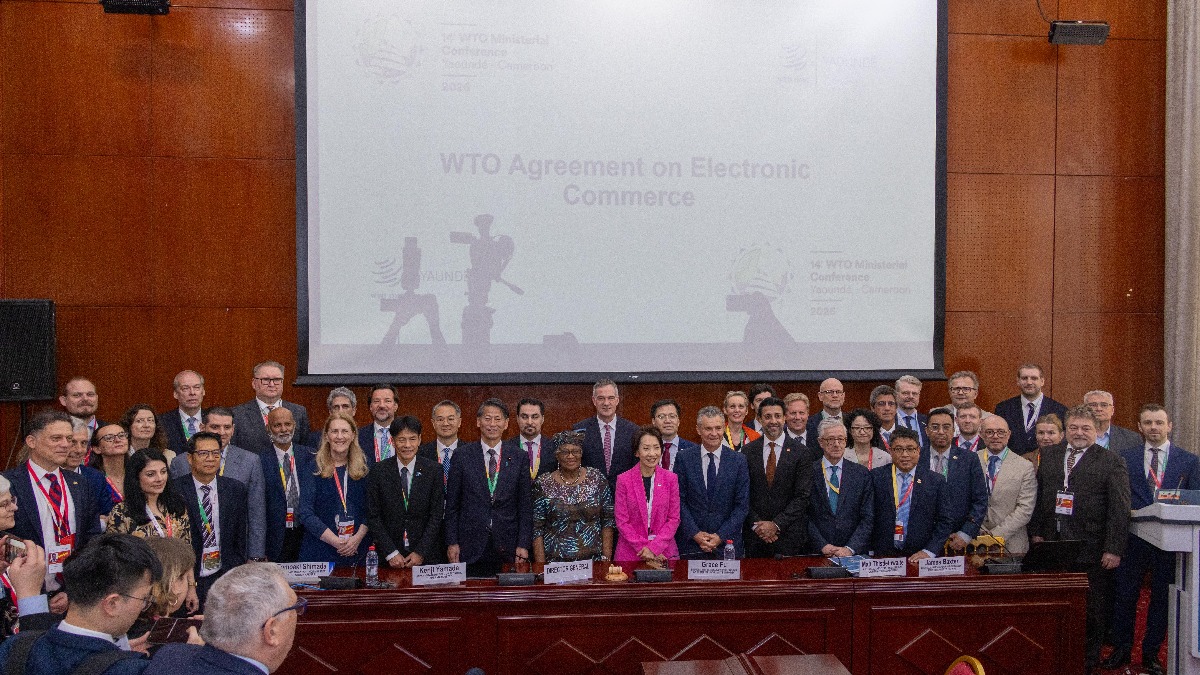
Aiming to modernizing the global marketplace for the 21st century, 66 member nations of the World Trade Organization (WTO) reached a historic agreement Saturday to implement the first-ever set of global rules governing digital trade.
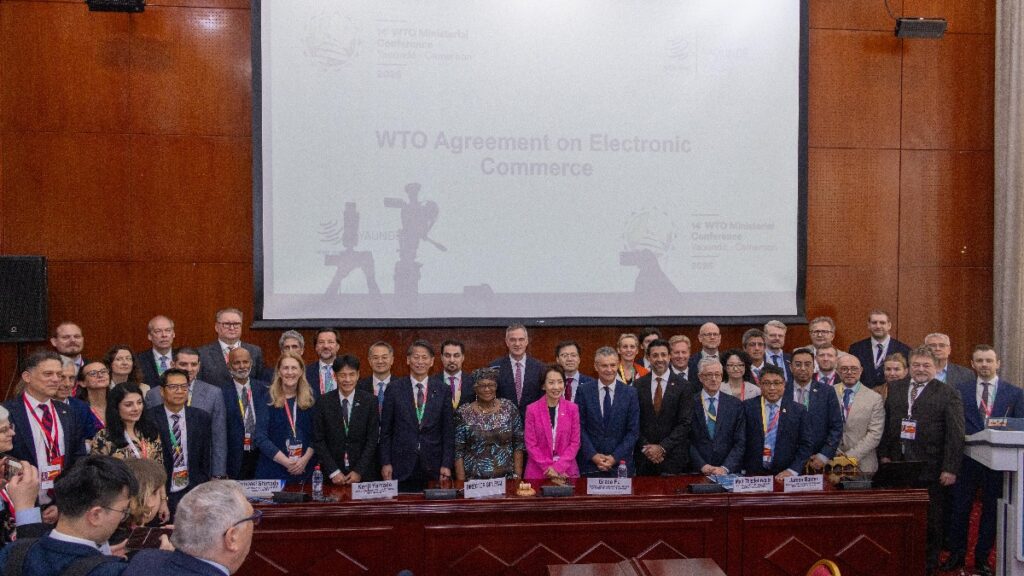
The announcement, made during the 14th WTO Ministerial Conference (MC14) on March 28, 2026, establishes a formal pathway for the Agreement on Electronic Commerce. The participating nations represent approximately 70percent of all global trade, signaling a massive shift toward a standardized, predictable environment for online business.
The adoption of these interim arrangements comes at a critical juncture for the global economy. Digital transactions now account for more than 60 percent of global Gross Domestic Product (GDP). However, until now, the lack of a unified international framework has created a patchwork of regulations that often hindered small businesses and increased costs for consumers.
According to research conducted by the WTO and the OECD, the failure to implement such an agreement has left an estimated $159 billion in potential trade value untapped every year. By establishing baseline rules, the agreement aims to capture that lost revenue. Projections suggest that if the agreement is eventually adopted by all WTO members, it could boost global GDP by a staggering $8.7 trillion by the year 2040.
WTO Director-General Ngozi Okonjo-Iweala hailed the development as a sign that the multilateral trading system is evolving.
“Digital trade is an exciting frontier for driving economic growth and job creation,” Okonjo-Iweala said. “By moving forward with the E-Commerce Agreement, participating economies are helping to establish a shared regulatory framework that can lower costs and unlock new opportunities.”
A primary focus of the new agreement is inclusivity. Leaders from both developed and developing nations emphasized that the rules are designed to help micro, small, and medium enterprises (MSMEs) compete on a global scale.
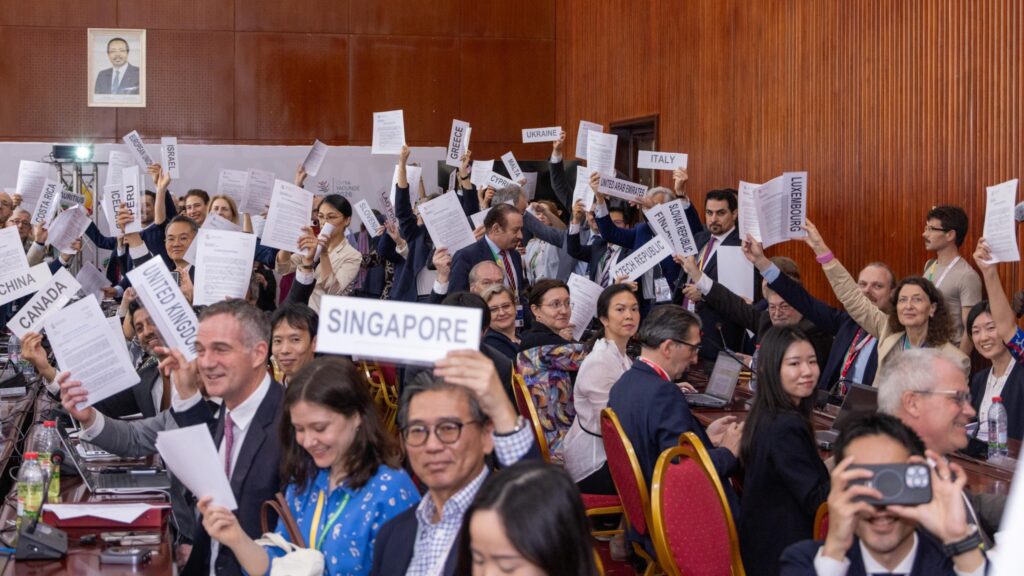
To ensure that smaller economies are not left behind, the agreement includes flexible implementation periods and technical assistance. This “Capacity Building Framework” is intended to help least-developed countries modernize their infrastructure and regulatory systems to meet international standards.
“For developing members like the Philippines, the E-Commerce Agreement provides a valuable framework to support MSMEs’ participation in global trade by enhancing trust and improving digital connectivity,” said Allan P. Gepty, Undersecretary for the Philippines.
Similar words were echoed by representatives from Africa and Central America. Mod K Ceesay, The Gambia’s Minister of Trade, described the deal as a “forward-looking step” toward sustainable development, while Costa Rican Minister of Foreign Trade Manuel Tovar Rivera noted that the achievement helps bridge the digital divide in his region.
The agreement was spearheaded by a “co-convenor” group consisting of Australia, Japan, and Singapore. These nations have led the negotiations to ensure the rules remain flexible yet enforceable.
“Australia is proud to lead delivery of the first set of digital trade rules with global reach,” said Matt Thistlethwaite, Australia’s Assistant Minister for Foreign Affairs and Trade. “The arrangements we are announcing today will deliver tangible benefits for our businesses and consumers.”
While the agreement has been adopted, it must now undergo domestic legal procedures in each of the 66 participating nations. The rules will officially enter into force once 45 members have formally deposited their “instruments of acceptance” with the WTO.
The ultimate goal for supporters is to see these rules fully incorporated into the permanent WTO legal framework. This would make the digital trade rules a core part of international law, rather than just a plurilateral agreement among a subset of members.
The breadth of the coalition is notable, including major economies such as the European Union, China, the United Kingdom, and Canada.
Maros Sefcovic, the EU Commissioner for Trade and Economic Security, called the move an essential step toward a “trusted digital trading environment.” Meanwhile, China’s Minister of Commerce, Wang Wentao, noted that the agreement would promote “more inclusive and sustainable digital growth.”
As the world economy becomes increasingly inseparable from the internet, the WTO’s latest milestone suggests that international diplomacy is finally catching up to the speed of fiber-optic cables and digital storefronts.