

By Leocadia Bongben
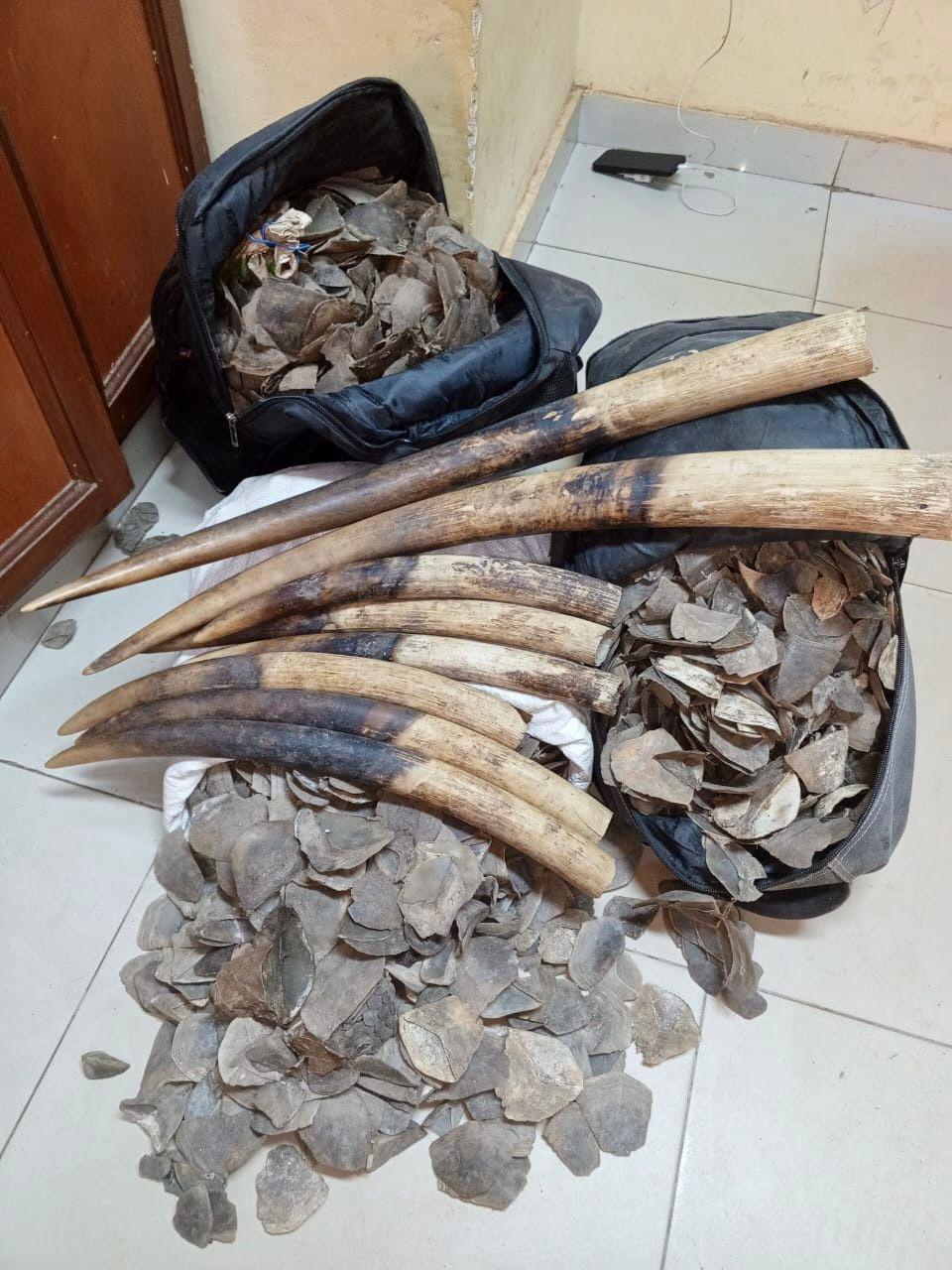
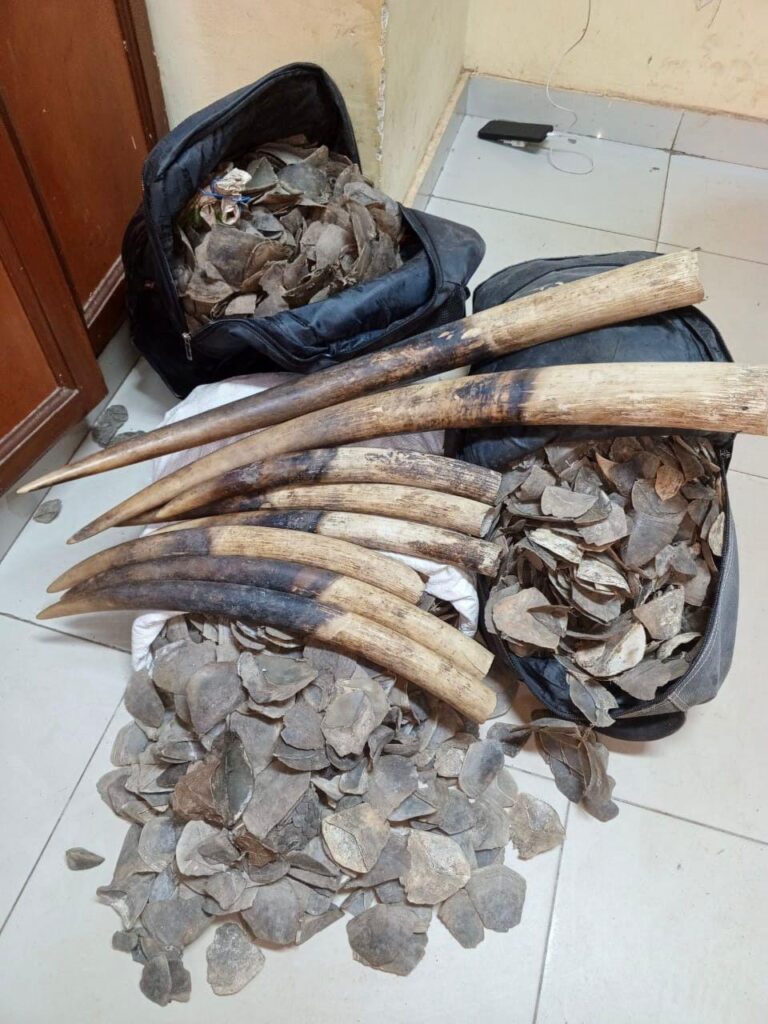
In the Yaounde neighbourhood of Ekoudoum, a suspected wildlife trafficker was apprehended while trying to sell pangolin scales and elephant tusks. The man was discovered carrying two backpacks, eight elephant tusks hidden in grain sacks, and another grain bag that included 52 kg of big pangolin scales.
As the 28-year-old suspect was about to complete the transaction, police and wildlife officials showed up and took him into custody. He had hidden the goods in the boot of a hired cab.
According to investigations, the trafficker is a member of a network of ivory dealers that operate throughout the South Region, especially in the vicinity of Djoum and Mintom, which are well-known hotspots for ivory trafficking.
He allegedly used public transport to get from Mintom to Yaoundé while meticulously hiding the goods. He sources the elephant tusks from the Republic of Congo, where he conducts business. He travels between multiple locations as a cocoa dealer, dealing in both wildlife items and cocoa.
The arrest operation was carried out with technical assistance from the Regional Division of the Judicial Police, the Center Divisional Delegation of Forestry and Wildlife, and LAGA, a wildlife law enforcement support organization.
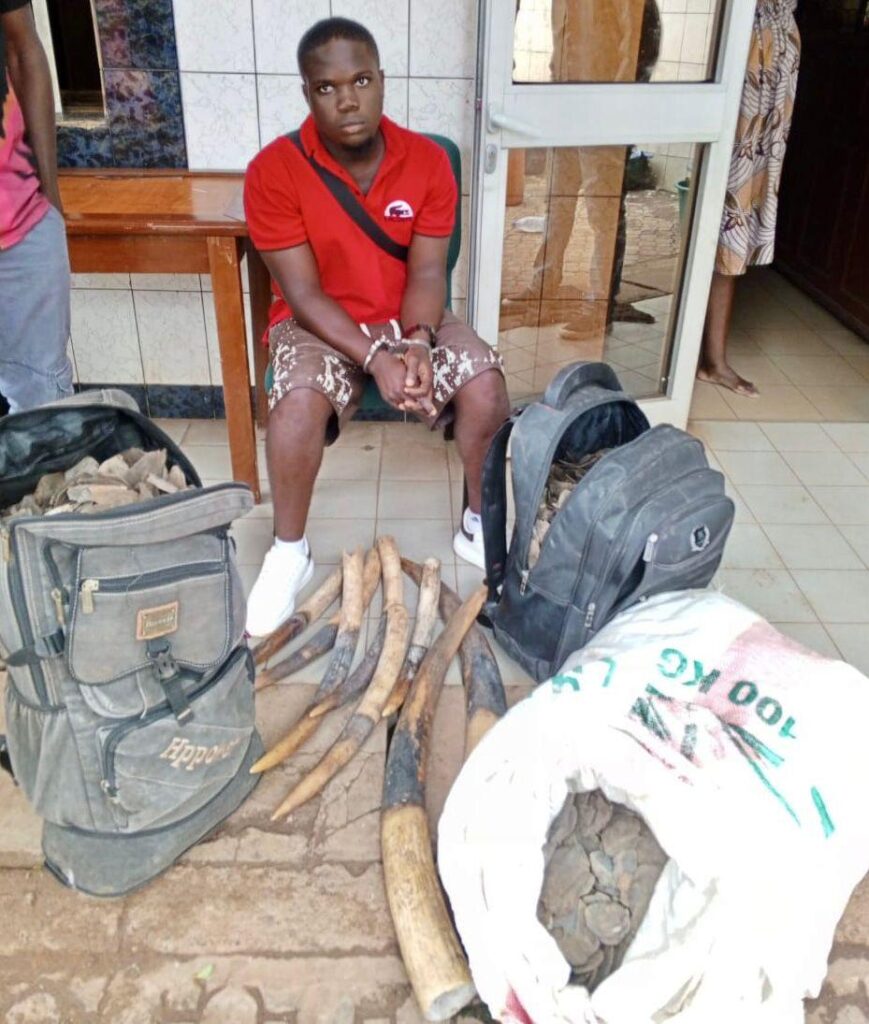
While the judicial process is underway, the suspect is presently detained. According to the 2024 wildlife law, which treats trafficking in wildlife items as a serious felony, he may spend up to 20 years in prison if found guilty.
To protect Cameroon’s biodiversity, the government has stepped up its efforts to combat wildlife trafficking. Because of this pressure, traffickers have had to go further underground, which makes enforcement more difficult. As demonstrated in this instance, traffickers increasingly use advanced concealing strategies to avoid discovery.
Elephants and every species of pangolin found in Cameroon are categorised as Class A, which means they are completely protected. It is strictly forbidden to trade, use, or transport these species, as they risk long-term imprisonment