

By Leocadia Bongben
Greenpeace Africa urges the government to halt the allocation of new mining exploitation titles in the wake of the Cameroon gold scandal and move on with a structural reform of the industry in order to improve governance, safeguard Indigenous Peoples and Local Communities (IPLCs), and maintain ecosystems.
It is worth recalling that over 15 tonnes of gold, valued at hundreds of millions of dollars, vanished from records in a recent period, sparking a massive gold scandal in Cameroon when the government discovered a startling discrepancy between officially declared exports and international import figures. Following this, the nation’s mining ministry discovered more than 200 illicit, foreign-owned artisanal businesses and filed lawsuits against over 100 mining corporations.
Only 148 kilos of gold were recorded for export by Cameroonian customs between 2021 and 2025, despite an estimated 44,000 kilograms (44 tonnes) of gold leaving the country for Dubai. The estimated worth of this gold is close to 2,000 billion CFA francs, or roughly USD 3.4 billion, which would cover the Ministry of Public Health’s yearly budget for five years in a row.
During a media appearance on May 25, 2026, the director general of SONAMINES disclosed this information. They corroborate what the Extractive Industries Transparency Initiative (EITI) had previously reported in its 2023 report: in that one year, 15,194 kilograms of gold of Cameroonian origin were imported, mostly to the United Arab Emirates, according to the UN Comtrade international database, while Cameroon Customs reported 22 kilograms exported.
According to Stella Tchoukep, a forest campaigner at Greenpeace Africa, “The losses that have already been documented are just a warning that needs to be taken seriously. The 44,000 kg of gold stolen between 2021 and 2025 will just be another statistic in the absence of effective and efficient control over operations in the mining sector and as long as Cameroon continues to issue mining titles without traceability mechanisms.”

“The Cameroonian state is not losing gold; it is being stolen from it. One of the entry sites for this crime is the legal system used to give mining titles. To keep stealing is to keep issuing titles without changing the system and enhancing governance,” she emphasized.
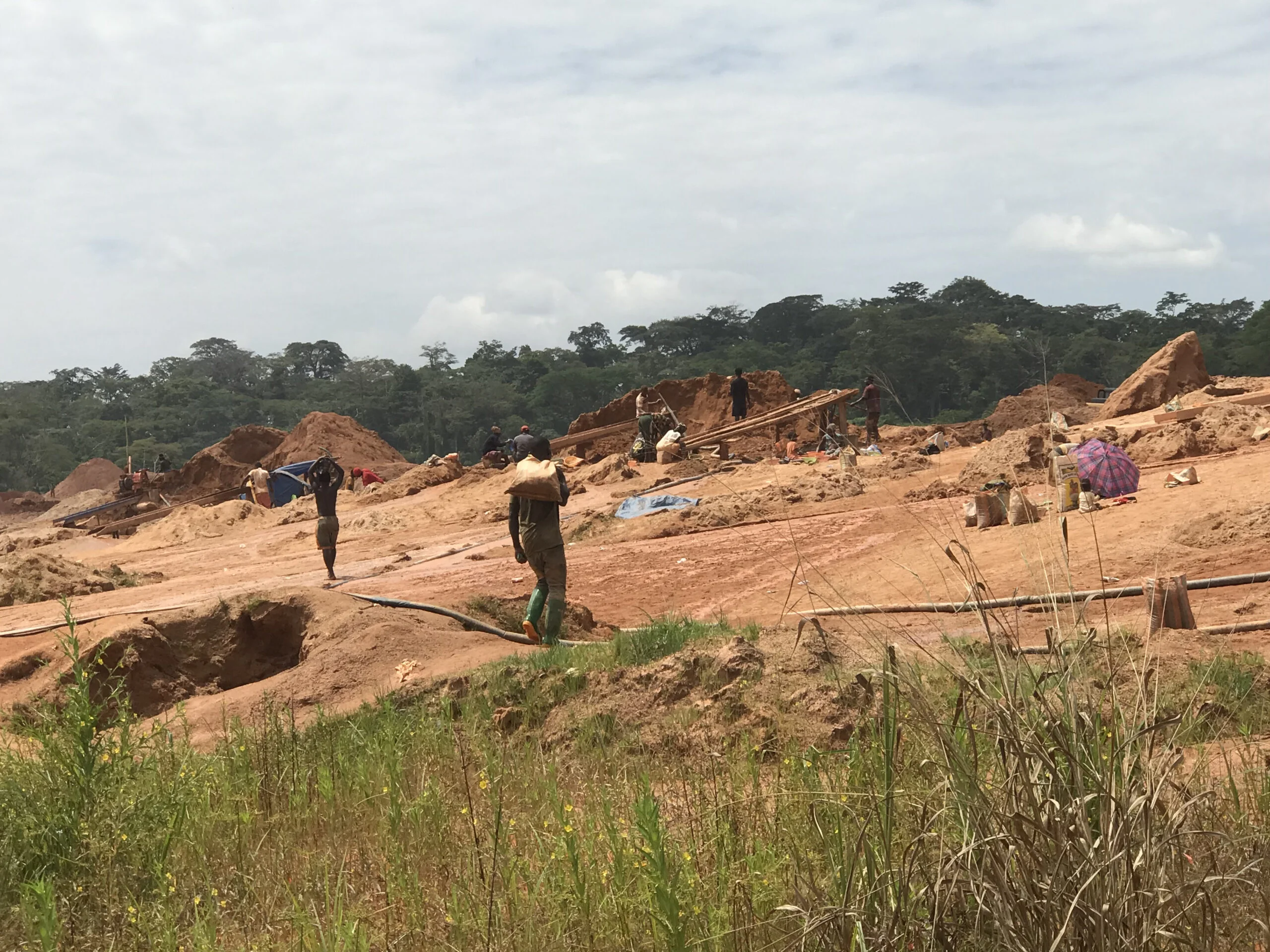
Because the system permits people to get away with it, this vast theft persists. The Ministry of Mines, Industry, and Technological Development (MINMITD) disclosed on May 13, 2026, that over 200 companies—more than 95% of which are foreign businesses—are operating unlawfully in the East and Adamawa areas. In order to move gold out of the region without declaring it, these operators are said to act through front partnerships with small local cooperatives, taking advantage of remote forest areas and profiting from internal collusion.
“This system’s main fuel is corruption.” Stella goes on, “Private actors, both domestic and foreign, are enriching themselves massively, while the average Cameroonian earns a minimum wage still below 50,000 CFA francs (around 76 euros).”
There are known environmental costs associated with illegal gold. According to a report released in April 2025 by the NGO Forête et Développement Rural (FODER), the size of mining sites in the Batouri, Ketté, and Kenzou zones alone increased by 5,000% in just fourteen years, from 82 hectares in 2010 to over 4,600 hectares in 2024. Waterways are deteriorating, and local populations’ agricultural areas are ruined.
Additionally, according to the 2023 EITI Cameroon report, no environmental fines were collected in 2023, and although it is mandated by the Mining Code, the mining site repair and rehabilitation fund is still not in existence because there is no implementing decree. Although there is no repair, the harm is genuine.