
By Leocadia Bongben
The multisport complex at the Yaounde 5 Council in the city of seven hills served as the venue where Cameroonian pupils, youths, and partners joined the World Wide Fund, WWF, to mark the 20th edition of Earth Hour.

Initiated by WWF, Earth Hour is a grassroots worldwide movement that encourages individuals, communities, and businesses to turn off non-essential electric lights for an hour, every year on the last Saturday in March from 8:30 to 9:30 p.m. local time to raise awareness on biodiversity loss, climate change, and environmental preservation as a symbolic act of environmental solidarity.
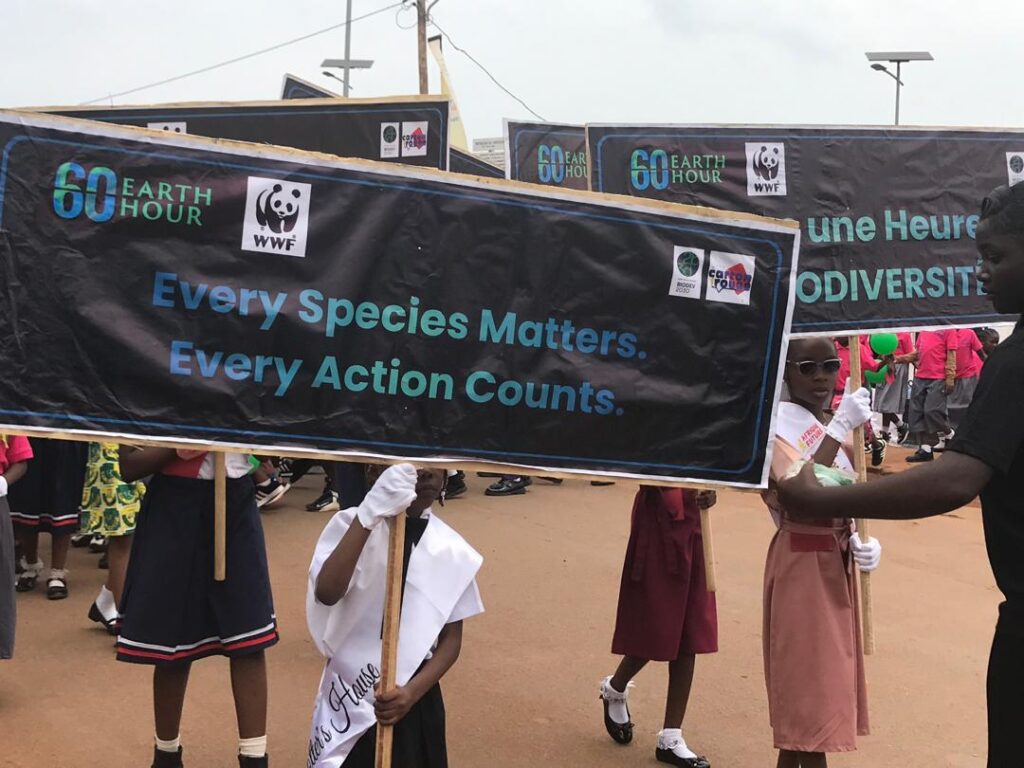
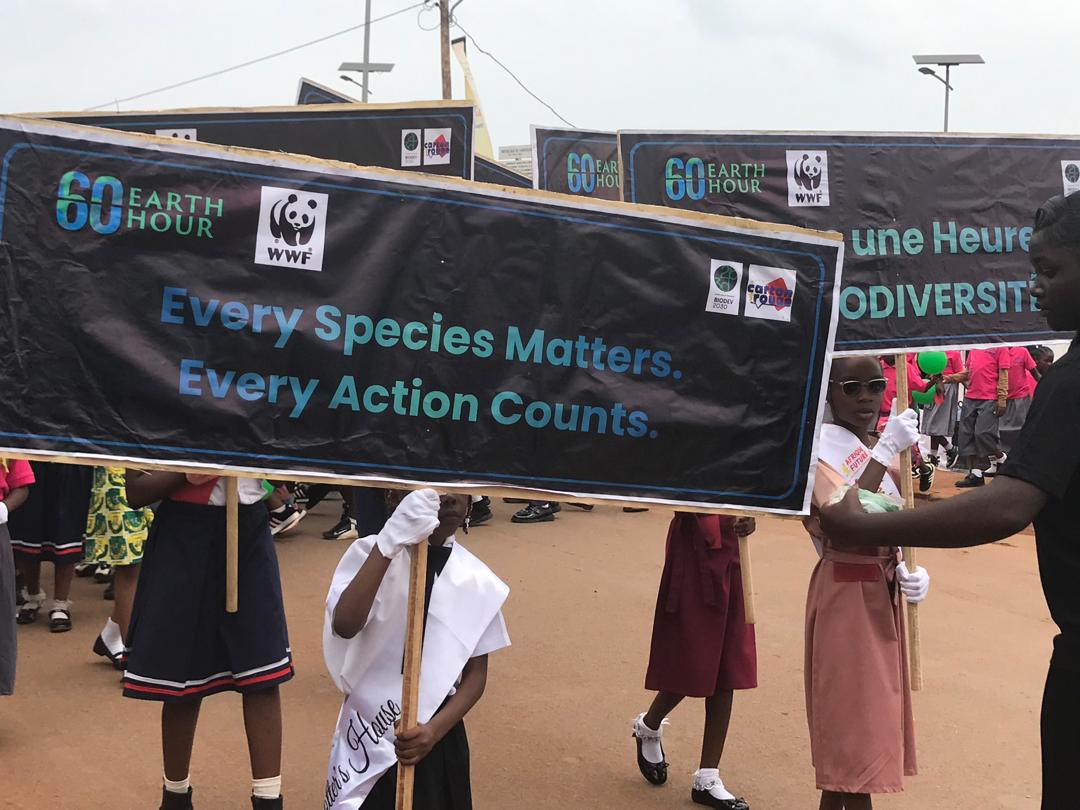
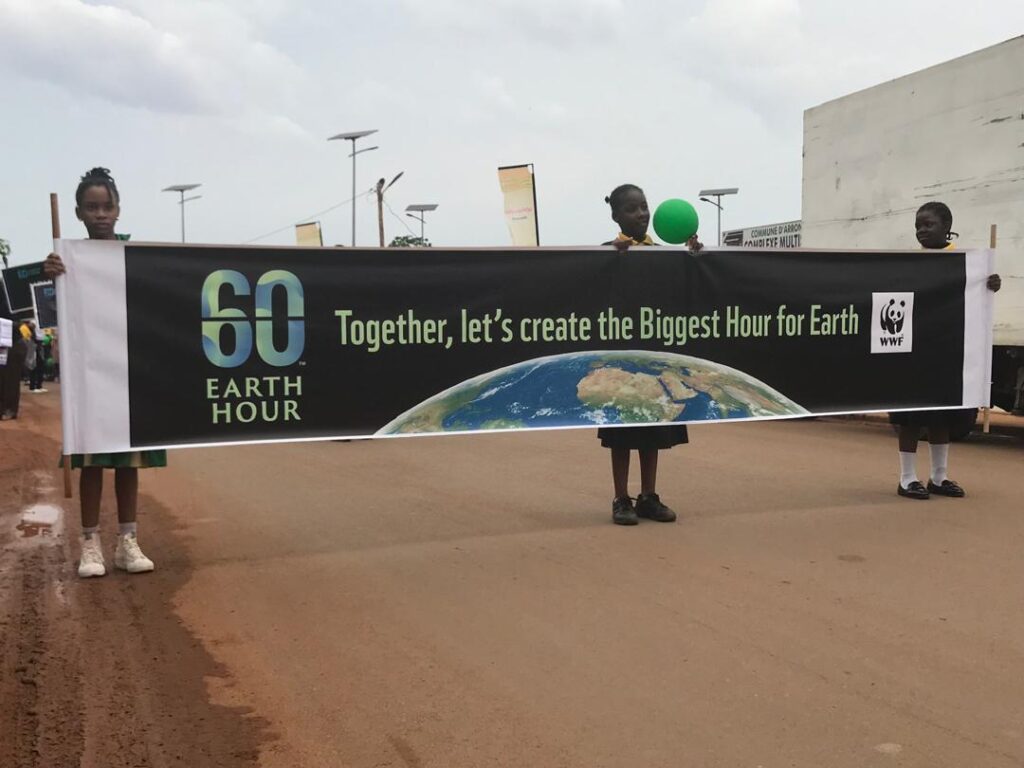
To mark the day, pupils bearing placards with some messages that read, ‘together let’s create the biggest hour for earth,’ ‘give an hour, save biodiversity,’ ‘every species matters -every action counts,’ walked the streets of Yaounde 5 to create awareness on the need to dedicate an hour to the planet.
Addressing pupils and partners, Cameroon WWF Country Director, Alain Bernard Ononino, said the focus this year is on biodiversity protection, given that Cameroon has an extraordinary biodiversity, including forest elephants, chimpanzees, gorillas, pangolins, and other species.
“It is important to preserve the species for the next generation, and children should be conscious of protecting the species for generations. At WWF, humanity is at the center of conservation, and we are proud to have partners in government, civil society, indigenous people, and the youth, a motive to double activities for the protection of biodiversity.”

Ononino recalls that, after an hour to reflect on how to protect the earth, the reality is that, everywhere, everyone, and all the actions together send a message. “Before we take an action, we should ask ourselves if the action contributes to protecting nature and biodiversity,” he said.
WWF Boss enjoined the participants to take positive actions for the planet every moment, every day, and every year.
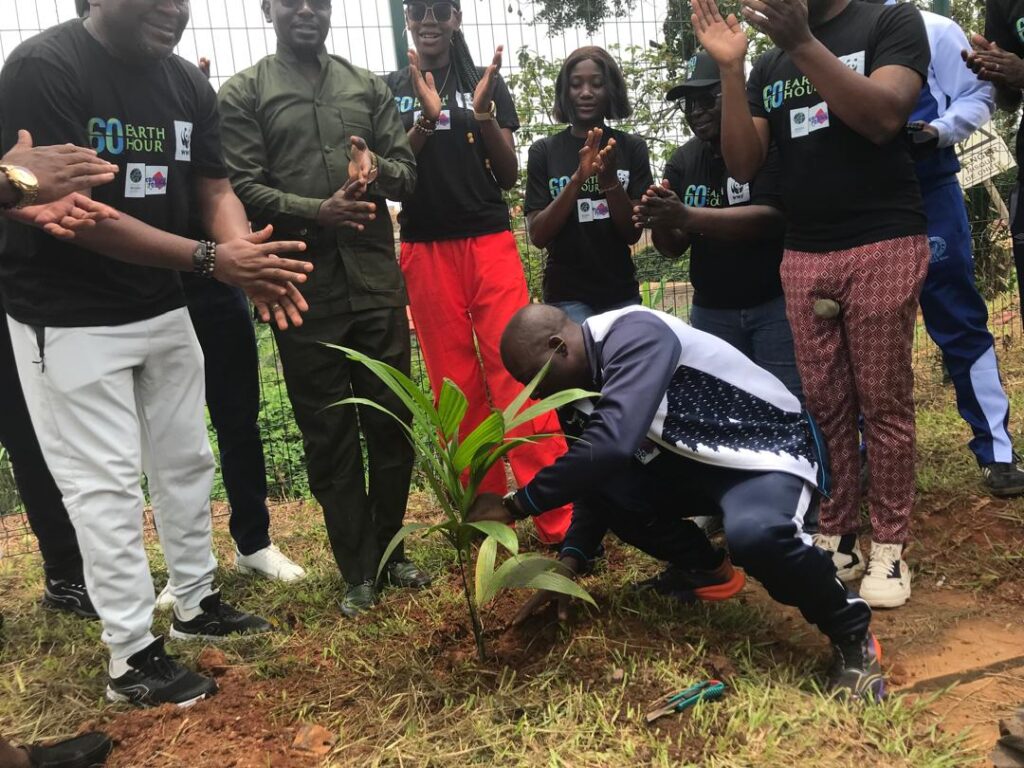
After the walk, WWF and partners planted a tree as a symbolic way of giving one hour back to Earth through supporting nature, climate, and local communities.
Earth Hour began on 31 March 2007 in Sydney, Australia, when 2.2 million people and more than 2,100 businesses switched off their lights to demand action on climate change.
Since its launch, Earth Hour has grown from a symbolic lights-off moment into a global movement that mobilises people year-round to protect the natural systems that sustain life.
In a landmark moment for regional conservation, WWF-Uganda established the world’s first Earth Hour Forest, protecting 2,700 hectares of land, helping combat deforestation, and supporting local communities.