
By Leocadia Bongben
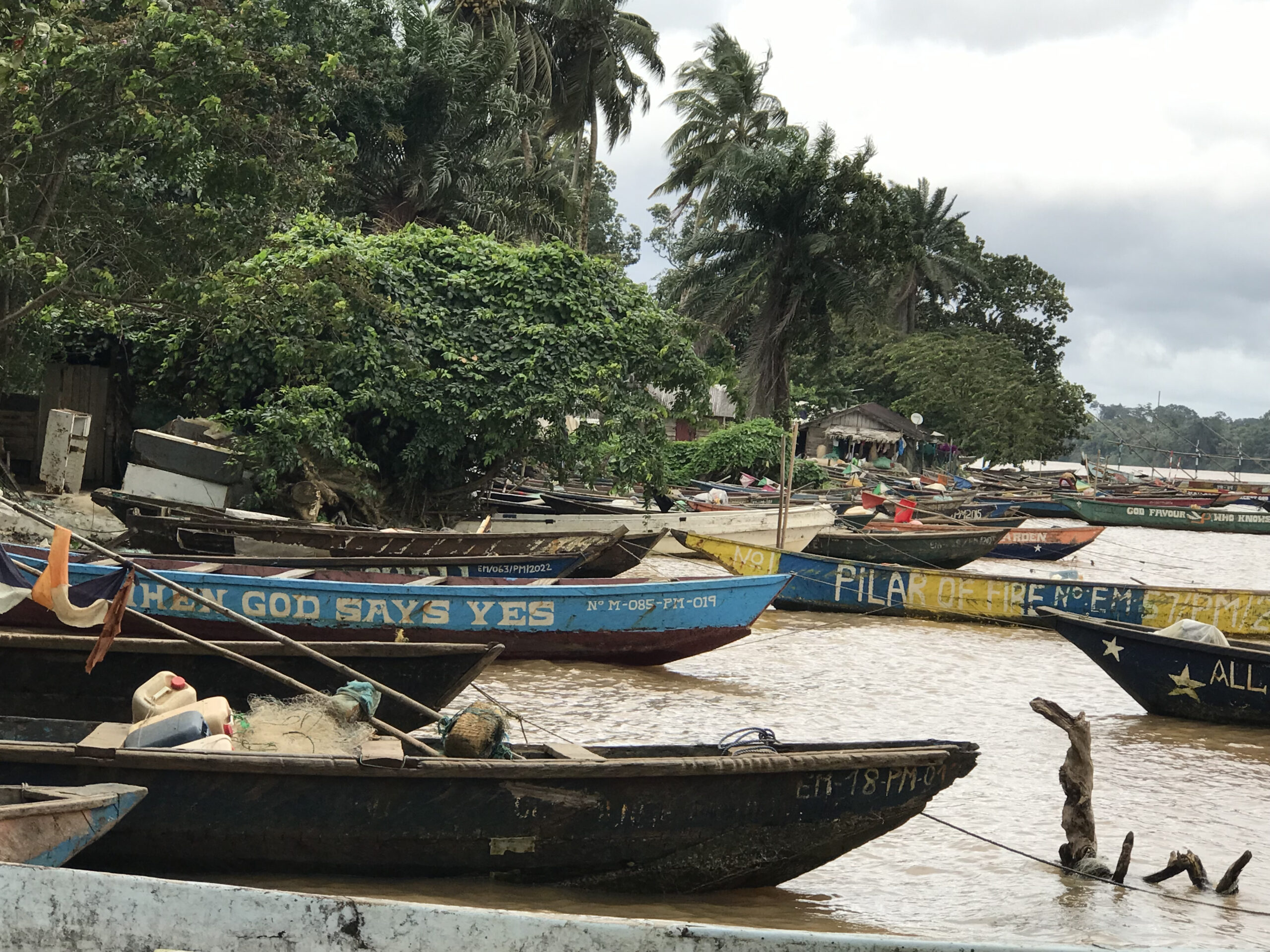
In Yoyo and Mbiako, two small fishing villages on Cameroon’s Atlantic coast in the Littoral Region, the Environmental Justice Foundation worked with two recently established fisheries co-management associations from March 5 to 12.
EJF facilitated leadership elections in August 2025 and strengthened accountability and inclusive governance, ensuring transparent and responsible management of funds.
The current EJF visit provided training, patrols, and technology to safeguard marine life, food supply, and livelihoods. This mission was a component of a project supported by the European Union that aims to assist communities in managing their waters appropriately.
Nine people from each community were trained to use the DASE app. The teams included local community leaders, park staff, and an official from the Ministry of Livestock, Fisheries, and Animal Industries. In addition, 20 fishermen in Yoyo and 26 fishermen in Mbiako were trained to use the app, enabling the entire community to participate in monitoring fishing activities. Strengthening community patrols gives fishermen the tools they need to defend their waters, rebuild fish populations, and secure their future.
The coastal communities have mobilized to defend their waters against illegal fishing, with support from the Environmental Justice Foundation (EJF). Illegal fishing leads to a drop in fish population and directly harms coastal communities in Cameroon. This reduces local fishermen’s income and ultimately means less food on the table. If left unchecked, it can destroy marine habitats and threaten the long-term sustainability of small-scale fisheries.
The mission was equally an opportunity for the EJF to provide direct funding to the Yoyo and Mbiako Community-Based Fisheries Management Committees (CRGP) to support community-led fisheries management and coastal monitoring.
“These grants turn community leadership into concrete action. By supporting coastal surveillance patrols alongside local authorities, we are giving communities the tools they need to combat illegal, unreported, and unregulated fishing in their coastal waters. This will help rebuild fish stocks, ease pressure on local fisheries, and ensure equitable access to marine resources for the communities that depend on them,” said Will May, EJF program coordinator.
Community-Based Fisheries Management Committees are strengthening local fisheries management and training patrol teams to use the EJF’s DASE app to document and report cases of illegal, unreported, and unregulated fishing.
“Sustainable fishing is strongest when communities are at the center of decision-making and enforcement. Empowering small-scale fishers means success for the people of Cameroon and our shared ocean,” said Nsowa Immaculate Munkeng, EJF’s program manager for Francophone Africa