


Thanks to the CIBEL project, communities near the Nki and Boumba Bek National Parks in Cameroon’s east will soon benefit from their community forests by using forest earnings to construct water stations and schools.
WWF Cameroon (with support from WWF France and the French Development Agency, AFD) in 2023 launched a project in the Cameroonian segment of TRIDOM (south of Nki National Park) titled Inclusive Conservation of Biodiversity and Ecosystems by Local Communities (CIBEL) to address extreme poverty, isolation, and human-wildlife conflicts, which are pushing the local population to engage in illegal activities such as poaching and illegal logging.
It should be noted that the Tri-national Dja-Odzala-Minkébé (TRIDOM) zone is a transboundary complex of protected areas covering approximately 178,000 km², which is approximately 10% of the Congo Basin, and is 97% forested. This territory is shared by Cameroon, Congo, and Gabon, which have committed to jointly promoting conservation, the sustainable use of natural resources, and sustainable development for the benefit of local communities. It is estimated that about 10,000 indigenous minority communities, the ‘Bakas,’ are among the inhabitants of the TRIDOM.
The forest ecosystems of the Congo Basin are under severe pressure due to poaching, the expansion of cash crop agriculture (such as cocoa and oil palm cultivation), deforestation, and industrial logging, leading to disastrous consequences for ecosystems.
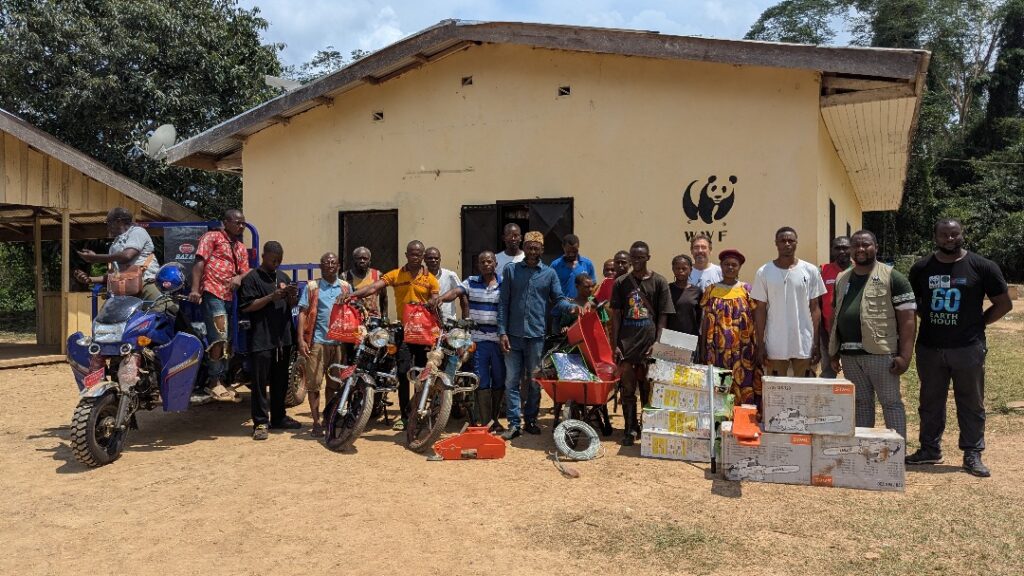
Against this backdrop, the CIBEL project is supporting communities in developing alternative income sources through four key sectors: sustainable cocoa production and enhancement, community forest management, value chains for non-timber forest products, and inclusive biomonitoring. The project is empowering communities to minimize the impact of human-wildlife conflicts and address endemic poverty by promoting alternative sources of livelihood.
A major impact of the project is the revival of community forests, which represent local efforts within Cameroon’s broader community forestry model, striving for sustainable resource use and community empowerment, supported by a conservation partner.
Ekaza Pierre, president of ADILEM (Association pour le Développement Intégré de Legoué et Mindourou), a beneficiary community forest shared by three communities, says, “We are happy with the support WWF is providing for the revival of our community forest. This will enable us to exploit our community forest and carry out developmental projects in our communities.”
The ADILEM community forest is one of the two community forests where WWF is assisting the community in obtaining the necessary administrative documents to enable them to legally exploit their forest and generate revenue. Within this context, WWF has supported the carrying out of socio-economic studies, multi-resource inventories, and the development of simple management plans for the beneficiary communities. The simple management plans were presented to the communities in November 2025, during highly attended meetings in the beneficiary communities.
Community forests in Cameroon are part of a larger national initiative established by the 1994 Forestry Law, which allows local communities to sustainably manage forest areas (around 5,000 hectares each) for local benefits.
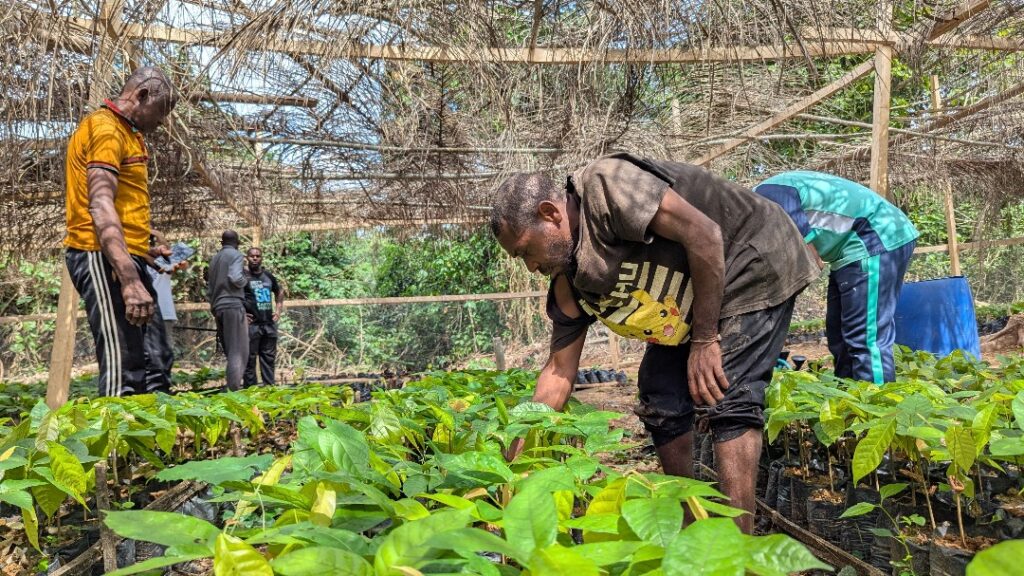
The CIBEL project activities are carried out in collaboration with Indigenous Peoples and Local Communities (IP&LC). Within this context, WWF supported the Ministry of Forests and Wildlife (MINFOF) in conducting wildlife inventories to estimate populations of large and medium-sized mammals in the two main national parks of TRIDOM (Nki and Boumba Bek); multi-resource inventories were conducted in three community forests supported by the project; over 120 community members were trained in best practices for sustainable cocoa cultivation, and cocoa seedling nurseries were established in three beneficiary communities comprising close to 50,000 plants. WWF is also organizing farmers (including women) into cooperatives to valorize and generate revenue from cocoa and non-timber forest products.
“After two years, the passion and community involvement are overwhelming. There are undoubtedly promising prospects for the CIBEL project here, and the cooperation between WWF employees and the community to achieve this accomplishment is heartening,” Stephane Ringuet, CIBEL Project Leader at WWF France, said.