

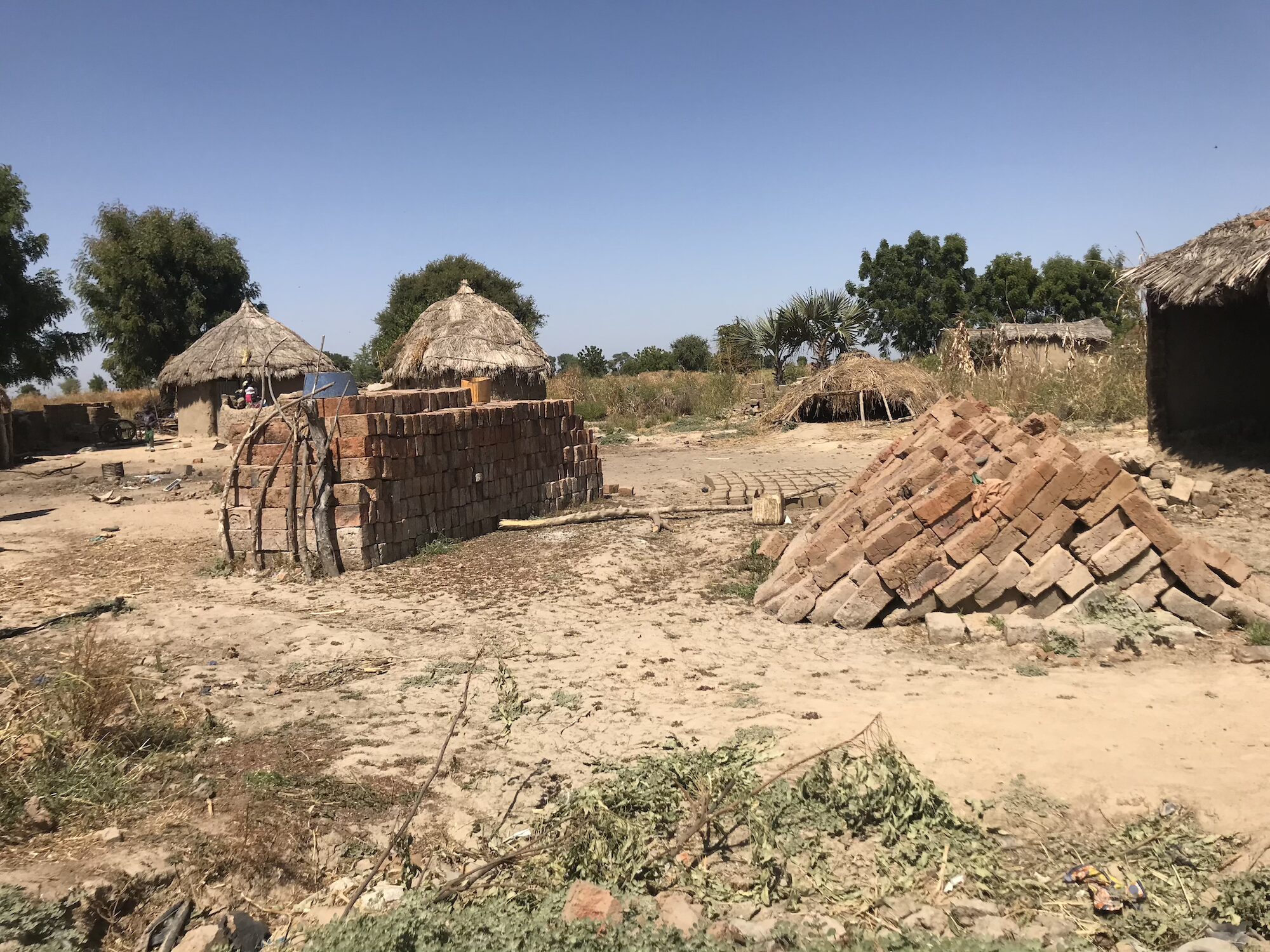
The International Federation of Red Cross and Red Crescent Societies (IFRC) issued a warning today that millions of people in Cameroon are dealing with a growing food crisis that is not getting much international attention.
Hunger is rising quickly, according to a recent survey of almost 6,000 families carried out by the Cameroon Red Cross with assistance from the IFRC network.
Families in the country’s Far North, North, and East areas are already skipping meals, selling animals, or taking on debt in order to survive, and over 3.3 million people struggle to find enough food.
Food supplies last less than a month, and 64% of households in some of the worst-affected areas suffer from extreme food insecurity.
IFRC Head of Country Cluster Delegation in Yaounde, Adesh Tripathee, states:
There is a latent hunger issue in Cameroon. Families are making every effort to just survive. Although this situation is not generating headlines, millions of individuals already deal with it on a daily basis.
Cash transfers, cereal bank help, agricultural recovery, nutrition initiatives, and community resilience programs are all being provided by the Cameroon Red Cross with assistance from IFRC and Movement partners. However, given the scope of needs, the available resources are inadequate.
The IFRC has launched an emergency appeal for CHF 9.6 million to support the Cameroon Red Cross in scaling up assistance for the most vulnerable communities. The operation will provide integrated support, including cash assistance, food support, livelihood recovery, nutrition services, clean water and sanitation, and protection programs.
The IFRC calls on partners and donors to urgently mobilize resources to protect the most vulnerable communities and prevent further deterioration of the humanitarian situation.
Families at breaking point
The Red Cross assessment revealed that more than 60 percent of households are relying on extreme coping strategies, including selling livestock, tools, and other productive assets needed to plant crops in the next season.
Only five percent of households still have the capacity to absorb another shock, leaving communities extremely vulnerable to further climate shocks, price increases, or conflict.
Parents are increasingly sacrificing their own meals so their children can eat.
A father from Logone-et-Chari in Cameroon’s Far North region says,
“We no longer talk about eating well; we talk about staying alive. First, we sold our goats to buy maize. Then I had to sell my plow so we could eat that evening. Now my wife and I skip food for two days so our children can have a handful of grain.”
Children are particularly at risk. The assessment found that eight in ten children are not eating enough nutritious food, putting them at risk of acute malnutrition and long-term developmental harm.
Cécile Akama Mfoumou, president of the Cameroon Red Cross, says,
“The situation is deteriorating rapidly. Families are exhausting the coping mechanisms available to them. Immediate support is critical to prevent further suffering.”
The situation is expected to worsen as the lean season (the period between planting and harvesting crops where food availability is at its lowest) arrives earlier than usual, starting in April instead of June, due to exhausted food stocks and reduced harvests caused by floods and erratic rainfall.
At the same time, more than 510,000 people are internally displaced, further straining already fragile livelihoods.
Although food is still available in many markets, it has become unaffordable for most families.