

By Leocadia Bongben
Tough times for traffickers in wildlife species, as a total of 8 traffickers were sentenced to varying prison terms in 2025. They were sentenced under the 1994 wildlife law, which provides for a prison term of up to 10 years for trafficking in protected wildlife species.
However, the 2024 law provides up to 20 years in prison for defaulters. Section 173 of the law states that anyone found guilty of killing, possessing, or marketing protected wildlife shall be punished with imprisonment of 15 to 20 years, a fine of FCFA 20 000 000 to 50 000 000, or both.
According to Eric Kaba Tah, this definitely makes the offense a criminal one, and therefore, the procedures warrant that an examining judge handles the matter.
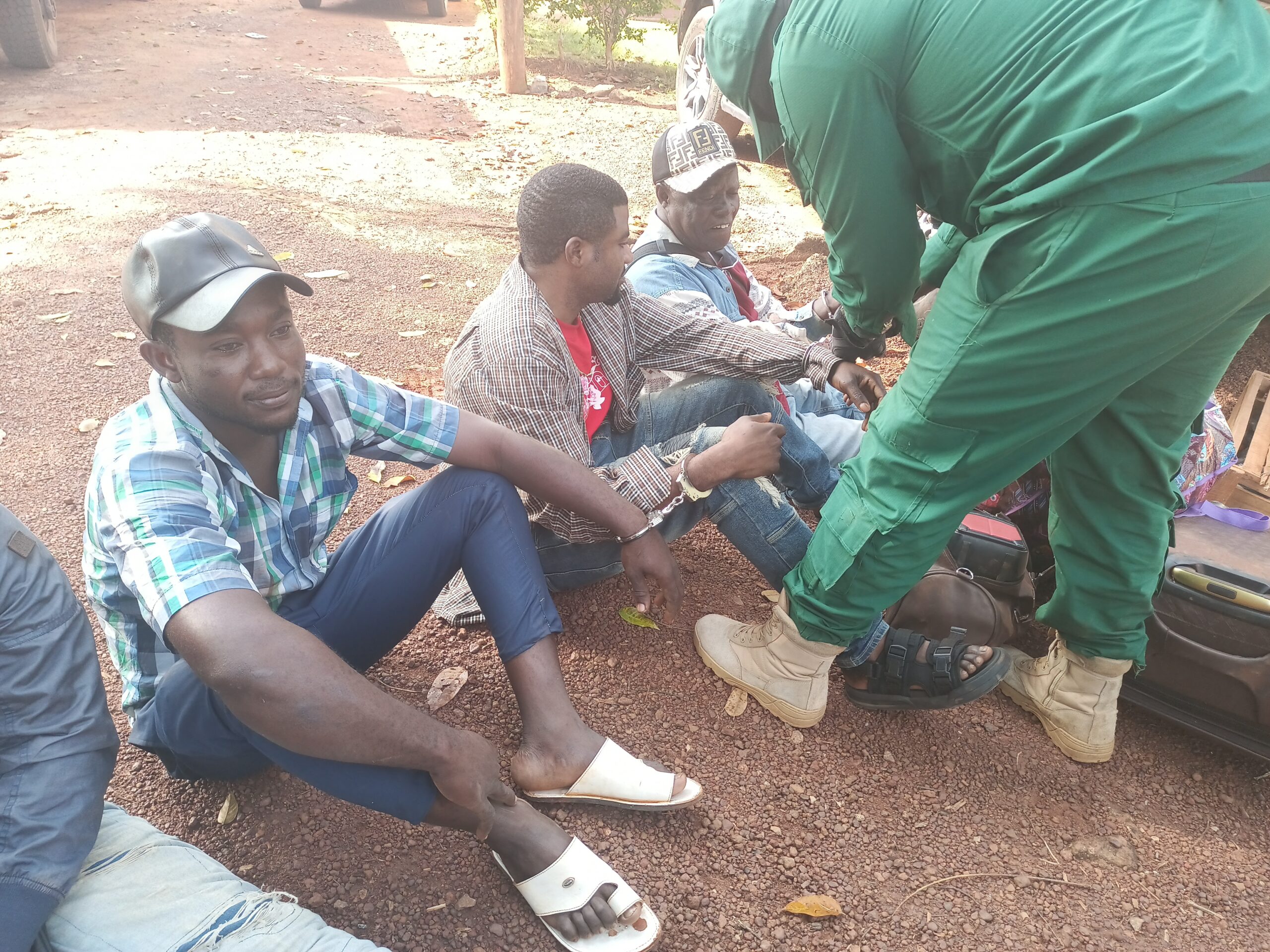
During one of the court hearings, 3 traffickers were found guilty and sentenced to 6 months in prison and ordered to pay CFAF 400 000 as fines. They were arrested with 28 African grey parrots in December 2022.
Presently, three traffickers are facing criminal charges following their arrest last December in Bertoua for illegal possession of 64 African grey parrots, a species that is listed in Class A and therefore totally protected. Another trafficker was arrested on December 17 in Yaoundé while attempting to sell 2 leopard skins, and the case is presently with an examining judge in Yaoundé. Leopards are a totally protected wildlife species. In both cases, if the traffickers are found guilty, they could be in prison for up to 20 years. These arrests were carried out by the Ministry of Forestry and Wildlife, with the technical assistance of LAGA, a wildlife law enforcement support organization.
LAGA’s deputy boss says these measures are aimed at quickly bringing down illegal wildlife trade drastically, especially as the crimes are taking on new and subtler dimensions, making use of technology and money laundering. The Central African subregion is therefore trying to catch up with these developments in wildlife criminality.
Conservation experts held a meeting in Douala recently to strengthen the application of the wildlife law. The meeting brought together experts from the government and NGO sectors to revise the Central Africa wildlife law enforcement action plan dubbed PAPECALF 2. The action plan seeks to strengthen the application of wildlife laws in the sub-region. Speaking during the
meeting. Luc Evouna, one of the experts from WWF, said, “We believe that the action plan of the COMIFAC member countries for the implementation of the wildlife law requires revision. This revision should address new forms of crime, particularly money laundering linked to wildlife trafficking and cybercrime in the context of wildlife trafficking. ” It is expected that several major wildlife traffickers will be arrested and face the 20-year jail term as stipulated in the 2024 Wildlife Law.
Stakeholders are of the opinion that the action plan of the COMIFAC member countries for the implementation of the Wildlife Law requires revision. This revision should incorporate new forms of crime, particularly money laundering linked to wildlife trafficking and cybercrime in the context of wildlife trafficking.