

By Leocadia Bongben
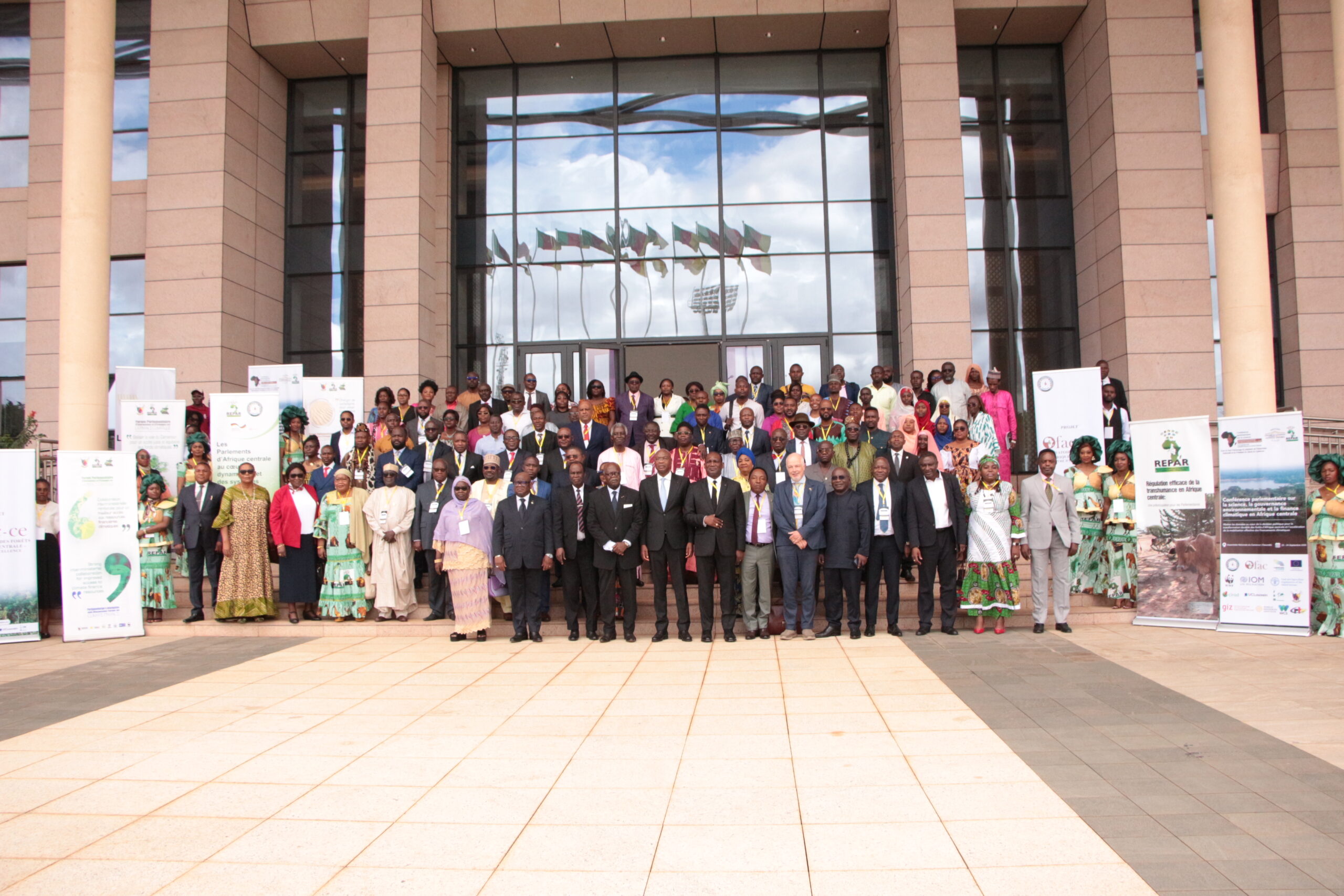
At the parliamentary conference on science, environmental governance, and climate finance in Yaounde from September 22 to 24, a WWF expert says Congo Basin conservation has a price which the global community needs to pay. The Central African Forest Observatory (OFAC) estimates that the Congo Basin Forest stores 60 gigatons of carbon. Therefore, governments must take advantage to estimate the worth of the forest carbon stock and determine how the international community will finance local action.
Jonas Kenajou Syapze, Tridom Landscape Financing Manager at WWF (Cameroon, Gabon & Congo), argued that compared to the Amazon Basin and the Borneo-Mekong Basin in Southeast Asia, just 4% of forest financial flows accrued between 2017 and 2021, a depressing situation because the rates of deforestation in the two other basins are extremely high. He bemoaned that the present international instruments prioritise funding restoration in the two basins, thus rewarding pupils who may be considered to be subpar.
Since the Rio Conference in 1992, the Congo Basin has pledged to manage its forest ecosystems responsibly, guarantee conservation, and maintain a very low rate of deforestation. “It should be noted that these are very rich forest areas, but which, instead of being resource ports for the states, are rather budgetary spending ports. States should reflect and collaborate with the Commission of Central African Forests to reverse the trend.
Speaking to lawmakers of the Congo Basin, the expert maintained that local action generates global benefits and that, for the global community to continue to benefit, it must support local actions. “How much can the states of the Congo Basin be paid for the estimated efforts in terms of stored carbon? The states have developed forest and environmental legislation, put in place sustainable forest management policies, created ministries of forests and the environment, and organised schools and training institutes in the field. It has a cost,” Syapze argued.
He maintained that conservation is the sector in which the states of the Congo Basin have excelled, because the deforestation rate is low and has remained comparatively low. “The international community can contribute in the short, medium, and long term to support the efforts provided by the states to continue to manage the forests sustainably, given that the coffers of countries are sometimes very low compared to the states that develop large polluting projects,” he stressed. And according to the polluter principle, and in line with the Kyoto Protocol of 1975, it would be necessary to change the data in the negotiations and put our priorities of the Congo Basin at the forefront, rather than theirs,” he added.
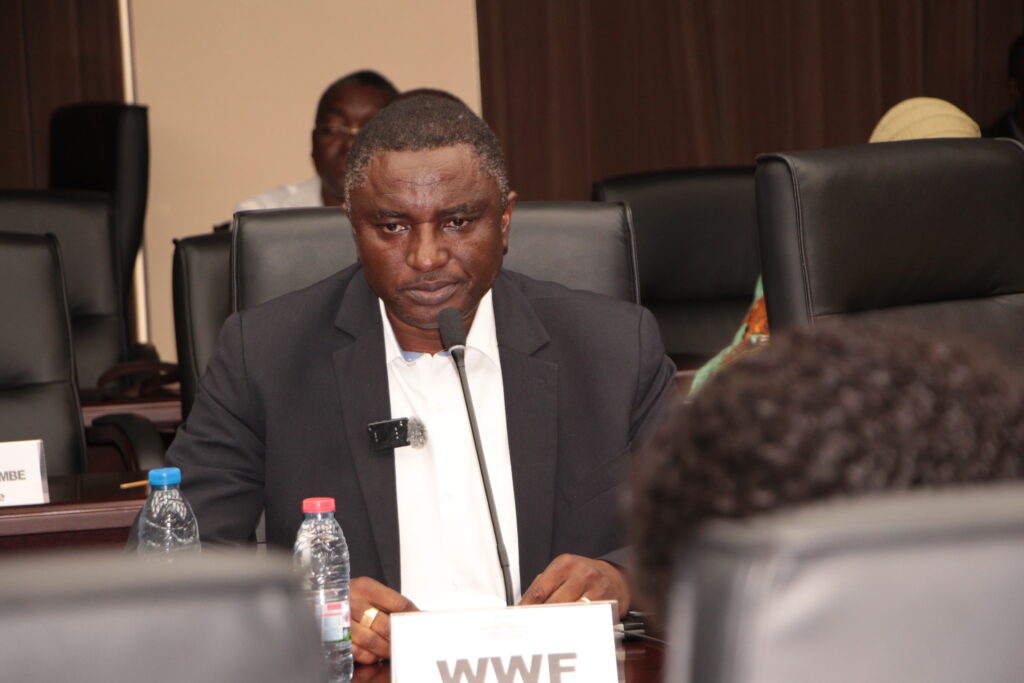
WWF’s landscape approach is pegged on green financing and on financing greening. He suggested the need to adapt legislation to the realities of complex forest landscapes, allocate specific national budgets to forest conservation, and develop robust, transparent blended finance mechanisms tailored to local circumstances. This is against the backdrop that the Congo Basin cannot be recognised solely for what it protects; it must also be provided with the necessary resources to continue protection.
He proposes that the lawmakers work with the COMIFAC in their respective countries to promote an approach of lenders and law proposals, with the example that a hectare of forest generates about 45 dollars per hectare for the states. “If the states can enact laws where the public order is centred on local wood transformation, on furniture made locally, it will generate a lot of added value and jobs.” This is linked to Article 5 of the Paris Agreement on climate talks about managing forest trees and the valuation of forest carbon stocks, he said.
He said the climate finance session was already an avenue for exchange, to raise awareness and share information. “We are already working to support the Commission of Central African Forests, COMIFAC and the countries to develop this initiative because it is also a question of climate justice and to be able to develop proposals centred on factual data, scientifically proven and validated, and put on the negotiating table to achieve palpable results in favour of the increase of financial flows for the forests of the Congo Basin.” The meeting was an opportunity for Central African countries to valorise resources from our forest ecosystems and together initiate a negotiation approach in which they master data, the issues, and the timing of negotiations.
According to Pierre Hele, Minister for the Environment, Nature Conservation, and Sustainable Development, Cameroon will need to mobilise about 30,000 billion CFA francs over five years, or about 600 billion francs annually, arguing that the parliament should support this environmental protection initiative
The legislature seems to have responded favourably to the executive’s request. “Above all, it is a matter of speaking with one voice, based on our realities, our data, our priorities, and our interests,” stated Hilarion Eton, First Deputy Speaker of the National Assembly of Cameroon. We believe that this process must naturally be supported by parliamentary collaboration.”