

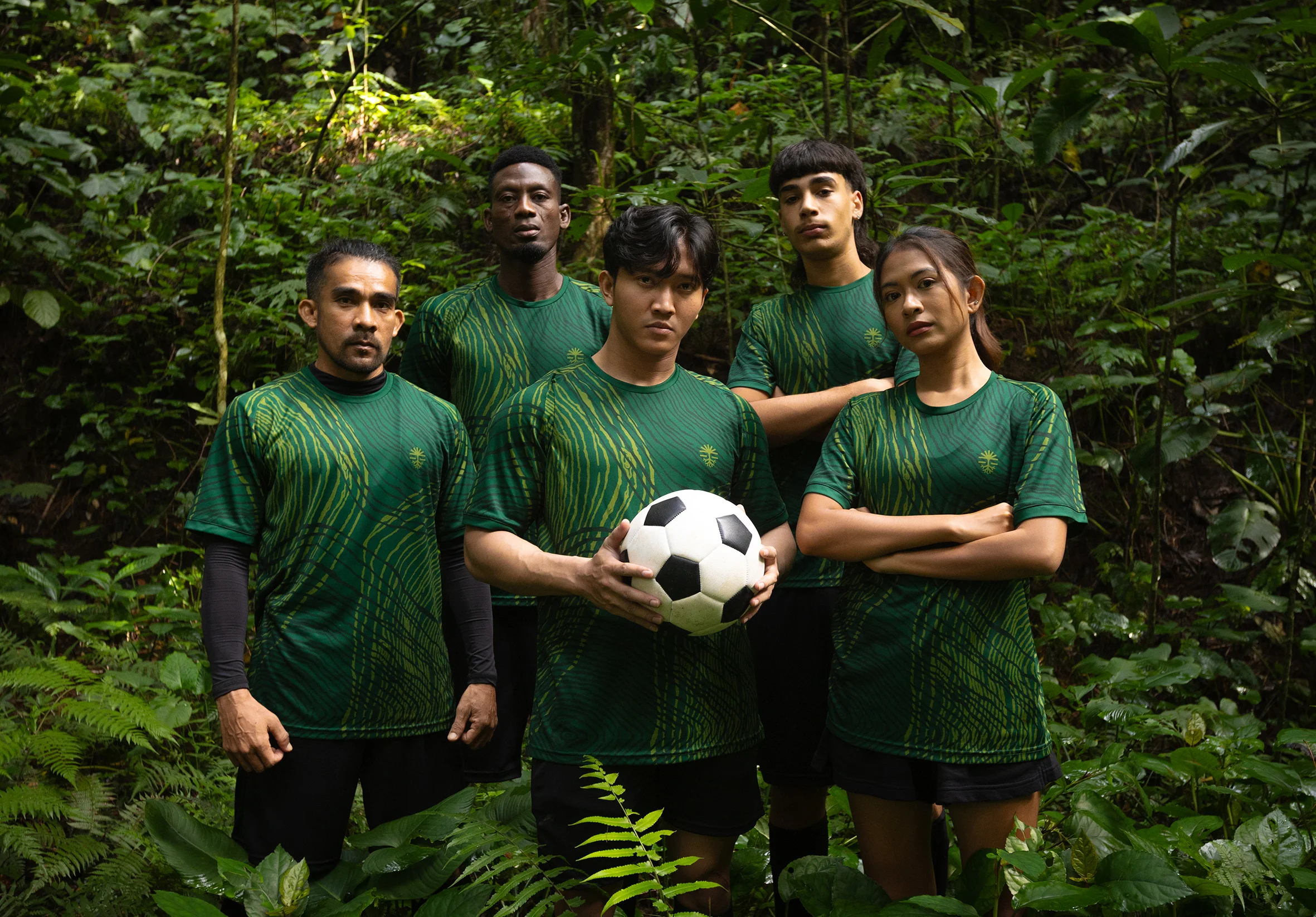
With the 2026 FIFA World Cup kicking off in a few hours with opening ceremonies in Mexico, Canada, and the United States, WWF is using football’s special ability to bring people together globally through a new campaign that encourages everyone to show their support for the world’s forests by joining “Team Forest”, a global community playing for our shared home ground.
Team Forest unites individuals from all around the world on a platform focused on taking action for forests while capturing the vitality and thrill of football. To create the amazing marketing film and activation platform that visualises collective action, WWF collaborated with Studio Birthplace.
The Lorong Oxygen Forest in Indonesia serves as the setting for the movie, which vividly depicts the notion that the forest is everyone’s home. Professional football players and stuntmen run, jump, and soar above the canopy, up tree trunks, and on the forest floor—not as a backdrop, but as the actual field. A breathtaking display of visual effects and real stunt performance.

People are urged to join Team Forest by visiting panda.org/teamforest and adding their own avatar to the growing number of supporters of our shared home ground. Team members can use the platform to learn more about forests and how they can contribute to the preservation and restoration of forest ecosystems.
“Just as our forests are for everyone, so is football. Forests are essential to life, regardless of one’s origins. However, woods are in dire need of our assistance. We ask everyone to join Team Forest and support these vital ecosystems that support us as the globe gathers for the Football World Cup. Let’s play for the home ground we all share,” says Kirsten Schuijt, WWF director general.
Sport and the environment
This campaign builds on WWF’s work around the world, working with football federations, clubs, and players to promote conservation efforts and mobilise fans behind environmental issues. Some key examples include WWF-Mexico’s partnership with Raúl Jiménez and Wolverhampton Wanderers for Mexican wolf conservation; WWF-Cameroon’s partnership with Roger Milla raising awareness on climate change and environmental conservation; and WWF UK’s partnership with clubs from the Premier League and English Football Leagues to raise awareness about nature loss by removing natural elements from their club crests.

According to Juan Martin Muller, Communication and Education Manager at WWF-Ecuador, “Football doesn’t just fill stadiums – it shapes identities, crosses borders, and ignites collective action like nothing else, making it one of the most powerful vehicles for positive change on our planet. And that is exactly what Team Forest represents – a unique opportunity for the global community to unite and play for our shared home. Our collaborations with football organisations already prove this is possible, bringing people together from all walks of life around a shared purpose. By joining Team Forest, we can build a new global fanbase committed to protecting the forests that are essential to our collective future.”
Healthy forests are essential for a healthy future
Forests have been at the heart of WWF’s work for half a century – working with communities and partners to support the conservation of forest landscapes, moving the forest sector towards sustainability, and working across the world to halt deforestation. There is strong global momentum for forests – Team Forest aims to galvanise this growing movement and spur more action.
‘Team Forest’ is not the only campaign around sports and the environment. In 2018, WWF-Cameroon partnered with football legend Roger Milla and his Cœur d’Afrique Foundation through a campaign known as ‘Sports for Nature’, which raised awareness of climate change and environmental actions.
Also, in 2020, Mexican professional footballer Raúl Jiménez partnered with Wolverhampton Wanderers and WWF-Mexico to launch the Protect the Pack campaign, raising awareness about the Mexican wolf. The campaign raised funds to protect the species, supporting the long-term goal of its removal from the endangered species list.
WWF-Ecuador partnered with the Ecuadorian Football Federation (FEF) to tackle single-use plastic pollution in football in 2025, with a plastic waste count during Ecuador’s World Cup qualifiers against Venezuela and Brazil. The data will be used to reduce single-use plastic in future matches.