
By Leocadia Bongben

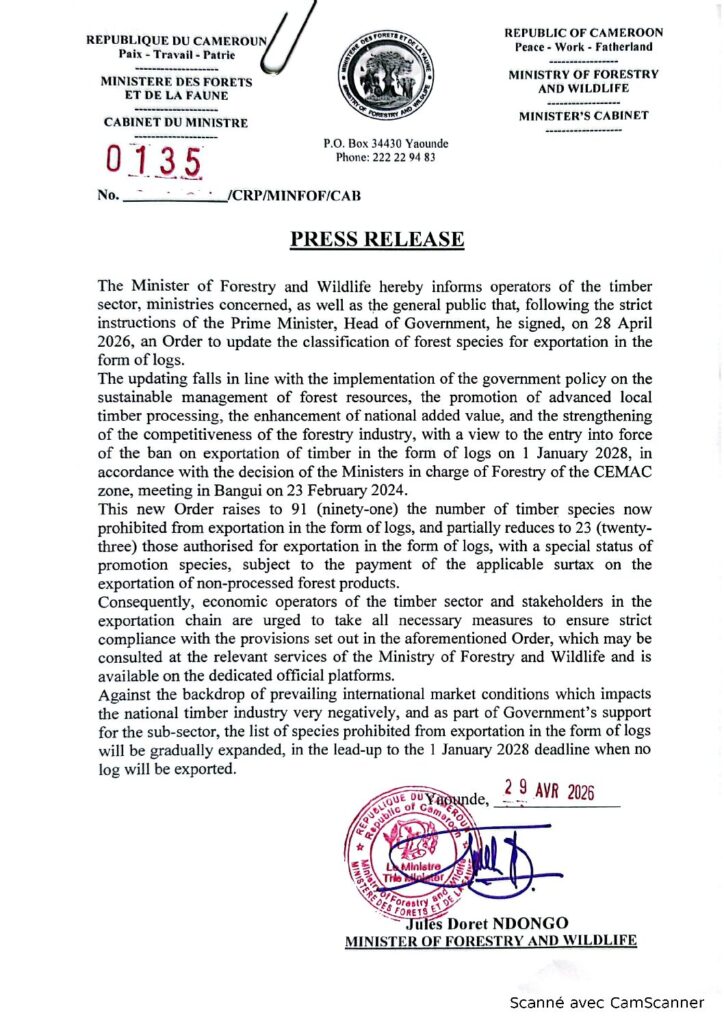
The Cameroonian minister of forestry and wildlife, Jules Doret Ndongo, in a release on April 28, increased the number of species prohibited from exportation as raw logs. The same release reduces the number of timber species authorised for sale in unprocessed form to 23. This decision paves the way for the entry into force on January 1, 2028, of the CEMAC decision adopted on February 23, 2024, in Bangui.
The Central African Economic and Monetary Community (CEMAC) nations will stop exporting raw logs on January 1, 2028. This is in line with the resolution made by the forestry ministers of the Democratic Republic of the Congo and the CEMAC region during the CEMAC Summit in Bangui on February 23, 2024.
To prepare Cameroon for this deadline, the Minister of Forests and Wildlife (MINFOF), Jules Doret Ndongo, signed a decree on April 28, 2026, making public a list of 91 tree species prohibited from export as logs.
The list of 91 timber species includes abale/abing/essia to Zingana/Amuk, including white mahogany, ayous/obeche, ekoumé, essenssang, esson/ekopa, iroko, teak, wamba, and wengue.
The number of promoted species now stands at 23. On April 4, 2024, Forestry Minister Jules Doret Ndongo initially banned the export of 76 timber species in log form.
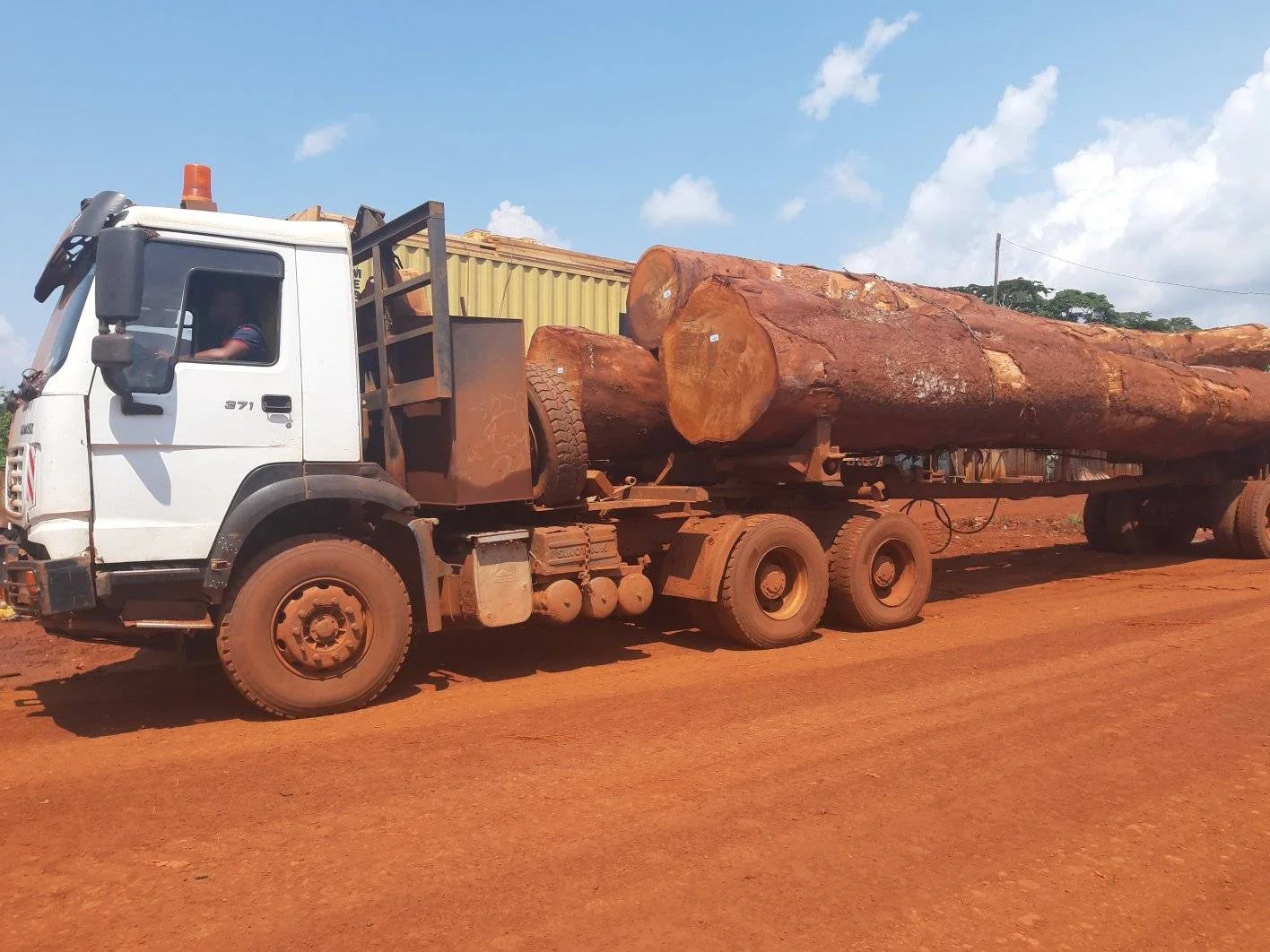
According to an online platform, Business in Cameroon, over the past seven years, the government has gradually raised export tariffs to deter the export of unprocessed and semi-processed timber. The export tax on raw timber increased by 343% between 2017 and 2023, from 17.5% to 60%. This fee was further increased to 75% of the timber’s Free On Board (FOB) value by the budgetary legislation for 2024. The government’s commitment to supporting the domestic timber industry is demonstrated by the significant 165% rise in the tariff on partially processed wood between 2016 and 2023.
Out of 1.7 million cubic meters of raw timber, only 746 cubic meters were shipped in 2022, according to data from the National Institute of Statistics (INS). Compared to the 958.3 cubic metres exported in 2021, this amount reflects a 22% decrease, Business in Cameroon writes.