

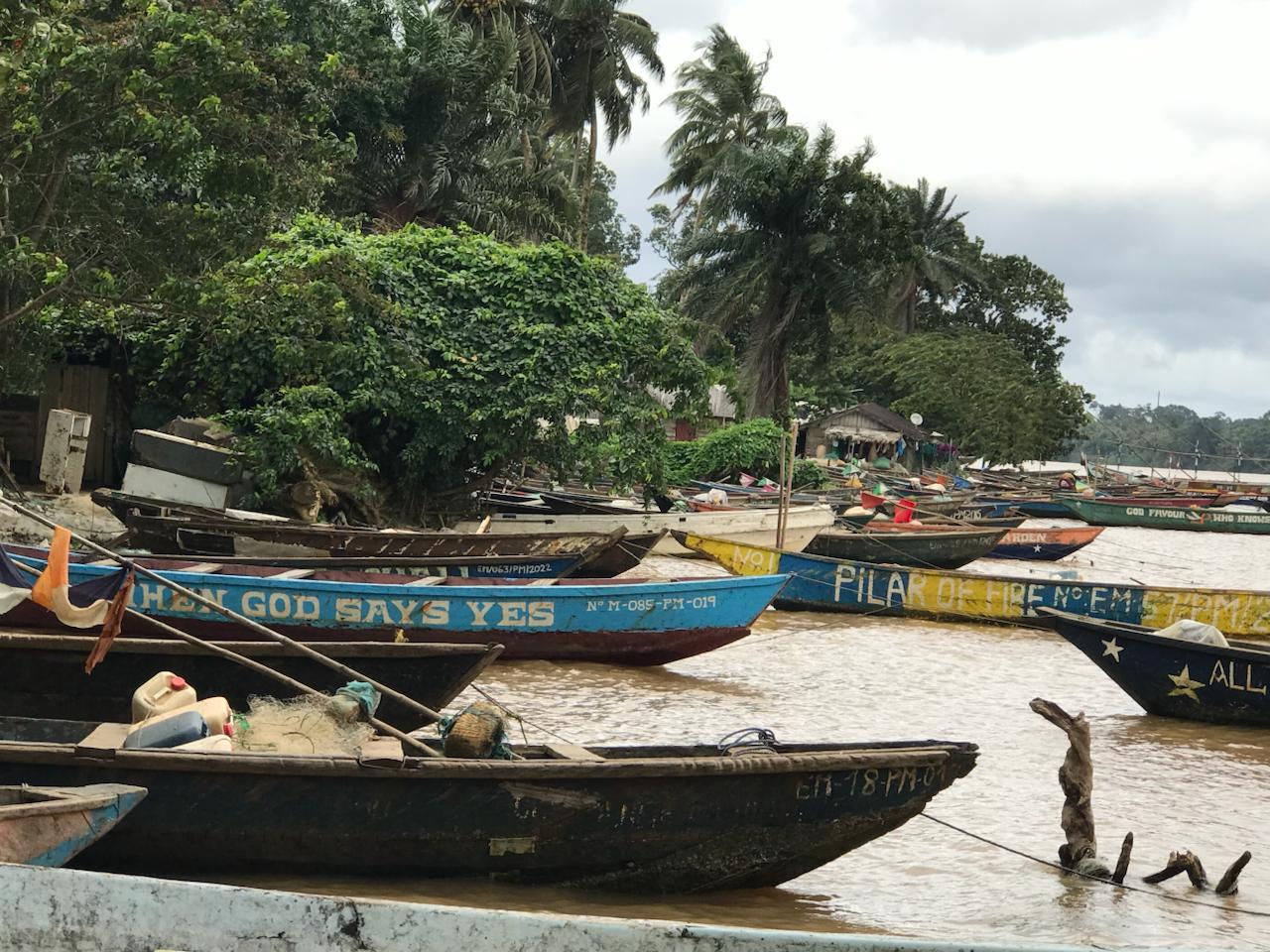
With exports of its seafood products to the European Union suspended since 2023, Cameroon is stepping up its reforms to combat “Illegal, Unreported, and Unregulated” (IUU) fishing. Amid legal advances, international commitments, and on-the-ground realities marked by the precarious situation of artisanal fishermen, the country is racing against the clock to preserve its fishery resources, its maritime sovereignty, and the food security of its people.
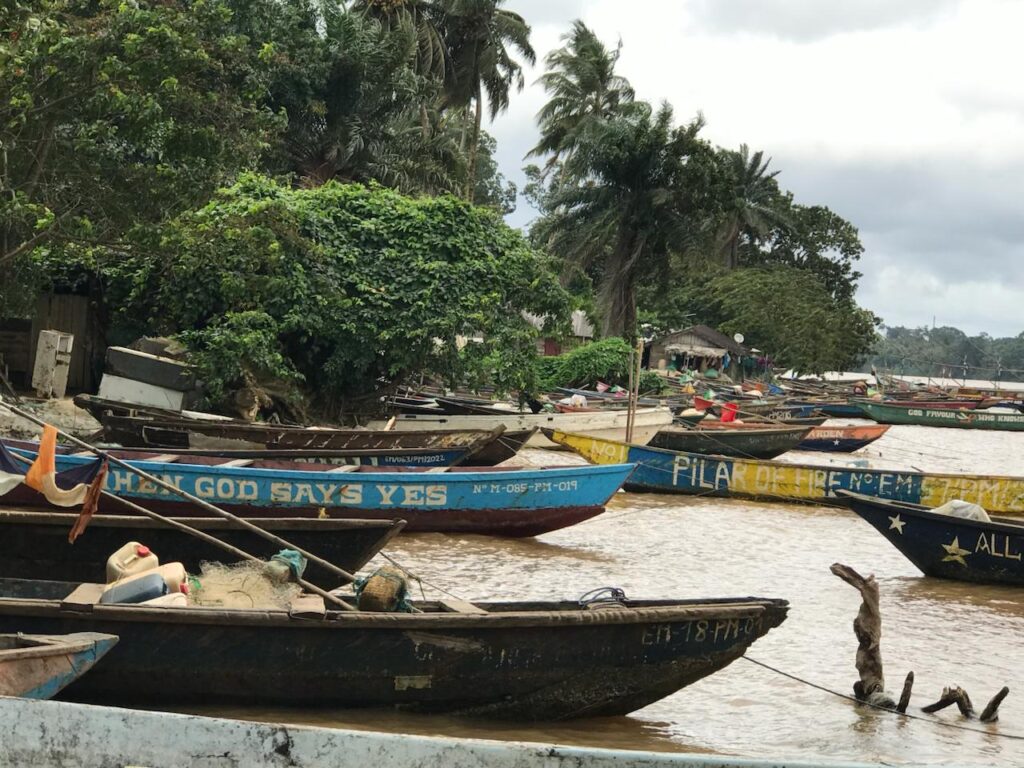
On the shores of Limbe in the southwest of the country, canoes line up at dawn in February 2026, ready to face a sea that has become increasingly unpredictable and dangerous, with dwindling fish.
Linos, a fisherman for three decades, describes an alarming situation: “Where I used to fill my canoe with a single net, today I have to set ten or twelve just to catch a small amount. The sea no longer provides as it once did.”
A few days earlier, the same cry was heard three hundred kilometers away, in Mbiako in the Sanaga Maritime region, from the heart-wrenching words of Patrick Ngoyi, a small-scale fisherman: “In just one year, my nets have been destroyed five times by industrial vessels, mostly foreign ones. They come right into our fishing area. When we file a complaint, they ask for evidence that we are unable to obtain.”
In Kribi, as in Douala-Édéa, the situation is the same: fish stocks are dwindling, while tensions between artisanal and industrial fishing are intensifying. Against this backdrop, illegal, unreported, and Unregulated (IUU) fishing continues to undermine a sector vital to the Cameroonian economy.
Peter, a young fisherman, is considering changing career and leaving the coastal town of Kribi, even though its waters are very rich: “The industrial fishing boats are sweeping everything up, day and night, even the small fish. Because of that, the fish is disappearing and becoming scarce. And to make matters worse, trawlers are even coming closer to shore to destroy our nets.” The consequences are manifold: depletion of resources, rising fish prices, impoverishment of coastal communities, unemployment, increased pressure on food security, and financial losses for the government…
These accounts illustrate a shared reality: industrial fishing, often carried out by foreign vessels or those flying the Cameroonian flag, encroaches on artisanal fishing zones and uses destructive techniques (notably chemicals, trawls, and especially small-mesh nets that catch everything, including juveniles that are essential for species regeneration).
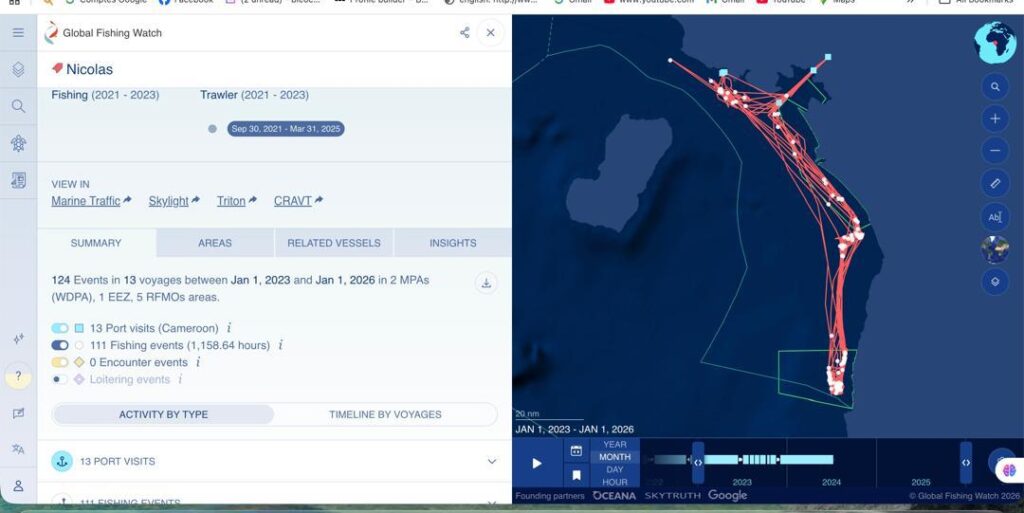
In January 2026, the Global Fishing Watch (GFW) clearly identified, with satellite imagery to back it up, Chinese vessels operating in marine protected areas (no-fishing zones) off the coasts of Edéa and Douala.
“The Red Card”
Since 2021, Cameroon has been in the viewfinder of the European Union, its main export market for fishery products. The “yellow card,” issued that year (the first restrictive measures), did not lead to the expected reforms. Consequently, the ultimate sanction, the “red card,” was issued to the country in January 2023: a total ban on the export of fishery products from Cameroon to the EU.
“It was certainly a wake-up call, but also a catalyst that roused the authorities and mobilized the country’s partners,” acknowledges an authoritative source at the Ministry of Livestock, Fisheries, and Animal Industries (Minepia). These sanctions have indeed highlighted the country’s shortcomings in terms of vessel control, catch traceability, hygiene, and preservation measures, and the enforcement of international standards.
Cameroon has a 400km long coastline, with about 212,000 fishermen, and an annual production of 300,000 tons, and loses about 100 billion to IUU fishing.
Efforts at reducing IUU fishing in Cameroon
Structural Reforms have accelerated at a dizzying pace. Such is the case with the obsolete 1994 law covering several sectors (forests, fisheries, wildlife), which has been replaced by the December 23, 2023, law on fisheries and aquaculture. This 105-article text modernizes the legal framework and strengthens (both judicial and financial) against illegal practices.
In a move of rare speed for the country, the three implementing decrees from the Prime Minister’s office were signed on March 18, 2026. The series of ministerial and interministerial orders has already been drafted, according to the Ministry of Fisheries, Aquaculture, and Marine Affairs (Minepia).

This is an encouraging step forward that is welcomed by the NGO AMCO (African Marine Conservation Organization), which is supporting the government in this process: “AMCO reaffirms its commitment to continuing its efforts, in collaboration with partners, to promote sustainable, transparent, and responsible fishing in Cameroon,” says its president, Aristide Takoukam Kamla.
As part of its reform efforts, Cameroon acceded to the Global Charter for Transparency in Fisheries in April 2025. It is in the process of incorporating other international instruments (such as the WTO agreements on fisheries subsidies, the agreement on high seas fisheries, and the FAO agreement on the responsibility of port states).
For now, the country’s image remains tarnished by the large number of its vessels involved worldwide in illegal fishing activities and other dangerous trafficking (notably Russian ships circumventing international sanctions). Recent cases made headlines in 2025. The entire Cameroonian fleet, including the fishing fleets, is managed by the Ministry of Transport, whose senior official attributes the scale of the “ghost ship” phenomenon to “weak oversight and the forgery of signatures from the four Maritime Districts (Douala, Kribi, Limbe-Tiko, Garoua), which are not yet interconnected.”
On February 6, 2026, the Prime Minister ordered the suspension of the registration of vessels flying the Cameroonian flag authorized to operate outside Cameroonian waters. Since 2024, Minepia has published the list of fishing licenses granted in Cameroon, including the names of the vessels and their owners (there were 33 in 2025).
Stakeholders are stepping up efforts to curb the scourge of IUU fishing in Cameroon. The platform comprising three ministries (fisheries, transport, and defense) has been transformed into an Interministerial Committee, housed within the Prime Minister’s Office, with expanded responsibilities (vessel registration, combating IUU fishing, maritime safety, taxation, health and social security for seafarers, etc.). Yet, this does not seem to be enough…
The Ministry of Defense points out that over the past decade, the Navy has increased its patrols tenfold, with “enhanced surveillance of restricted zones and regular boarding of illegal vessels.” At Minepia, there is a desire to strengthen the monitoring system, particularly satellite tracking—especially since pirates are constantly improving their own systems, including jamming devices.
At the port of Douala-Bonaberi, surveillance has been boosted with over 700 cameras and joint patrols. But IUU activities often evade these measures. Abdoul Akim, the port commander, explains: “Boats involved in illegal fishing do not operate far from official ports. They don’t go through our channels.” A customs official, speaking on condition of anonymity, confides: “We have neither state-of-the-art patrol boats nor suitable equipment. The vessels use jamming systems and carry out transshipments at sea without supervision.”
Challenges persist
On the ground, those involved continue to voice their distress, feeling that illegal operators have far too much power. “We’re told that the laws are in place, but every day we see Chinese or Nigerian boats coming to fish right in front of us with powerful gear.
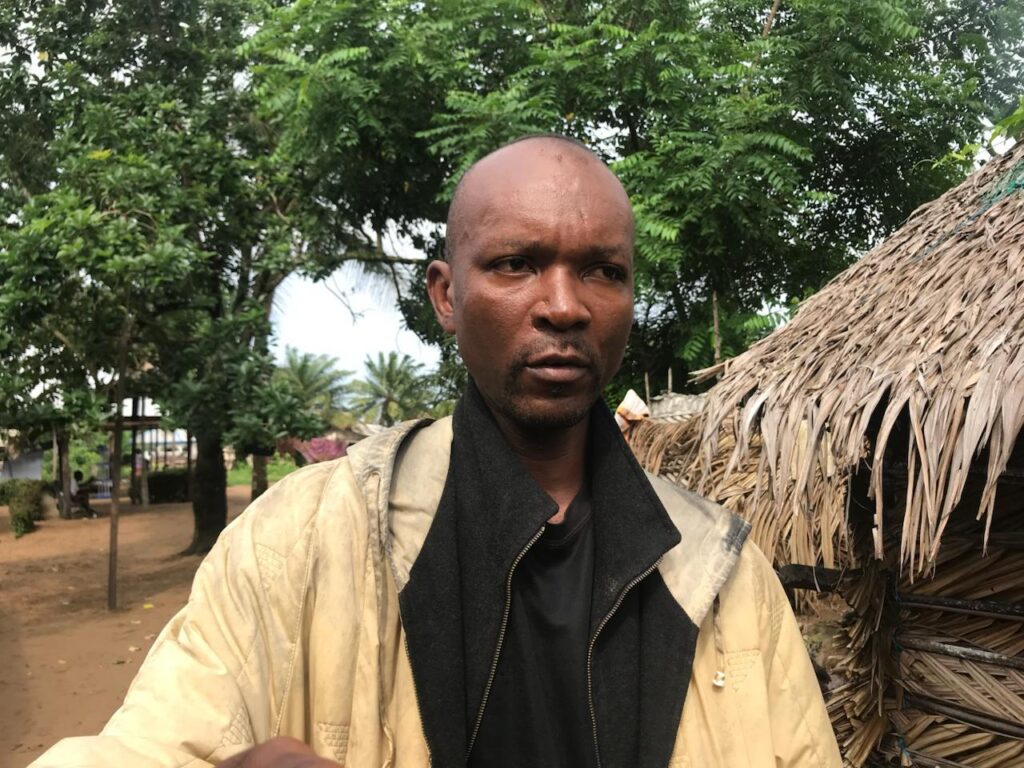
And the authorities see it too,” Peter from Kribi sums up with frustration. Linos from Limbe describes a heartbreaking situation backed by hard numbers: “These boats also come to cut our nets at sea. When they pass by, they destroy our equipment, which is expensive. A 15-horsepower engine costs nearly 2,800,000 CFA francs, not to mention fuel, ice, and bait. When my net is cut, I lose everything.
We, small-scale fishermen, stay close to the coast with our limited canoes, while they fish without restraint. We are calling for stricter enforcement at sea, because this illegal fishing is suffocating us and destroying our future.”
National shipowners do not seem to be faring any better. Louis-Martin Imoulanok, president of the Cameroon Shrimp Platform (Placrecam), reveals that in reality, the majority of fishing licenses “belong to Cameroonians who, lacking the means and technical capabilities, rent them out to “foreigners.”
The bitter result: control of the vessel slips from the owner’s hands; the catches and prices are managed by foreigners, “with no regard for patriotism,” who control everything at sea and in the market. Imoulanok proposes that the state act as a guarantor and provide a bank guarantee for the purchase of boats by national shipowners, and that it reserve for Cameroonians “the exclusive right to import and sell fishing equipment, to facilitate compliance and cost controls.”
An operator in the shrimp sector (Cameroon’s leading seafood export product), Mr. Imoulanok, is a direct victim of the infamous “red card.” He, too, hopes that the EU referee will put it back in its pocket, given the combined efforts to eradicate IUU fishing in Cameroon.
Article produit par André NAOUSSI, Leocadia BONGBEN, Boris NGOUNOU of the (Media for Fish and Animal Resources Network), MEFAR, with support from the African Marine Conservation Organization, AMCO.