

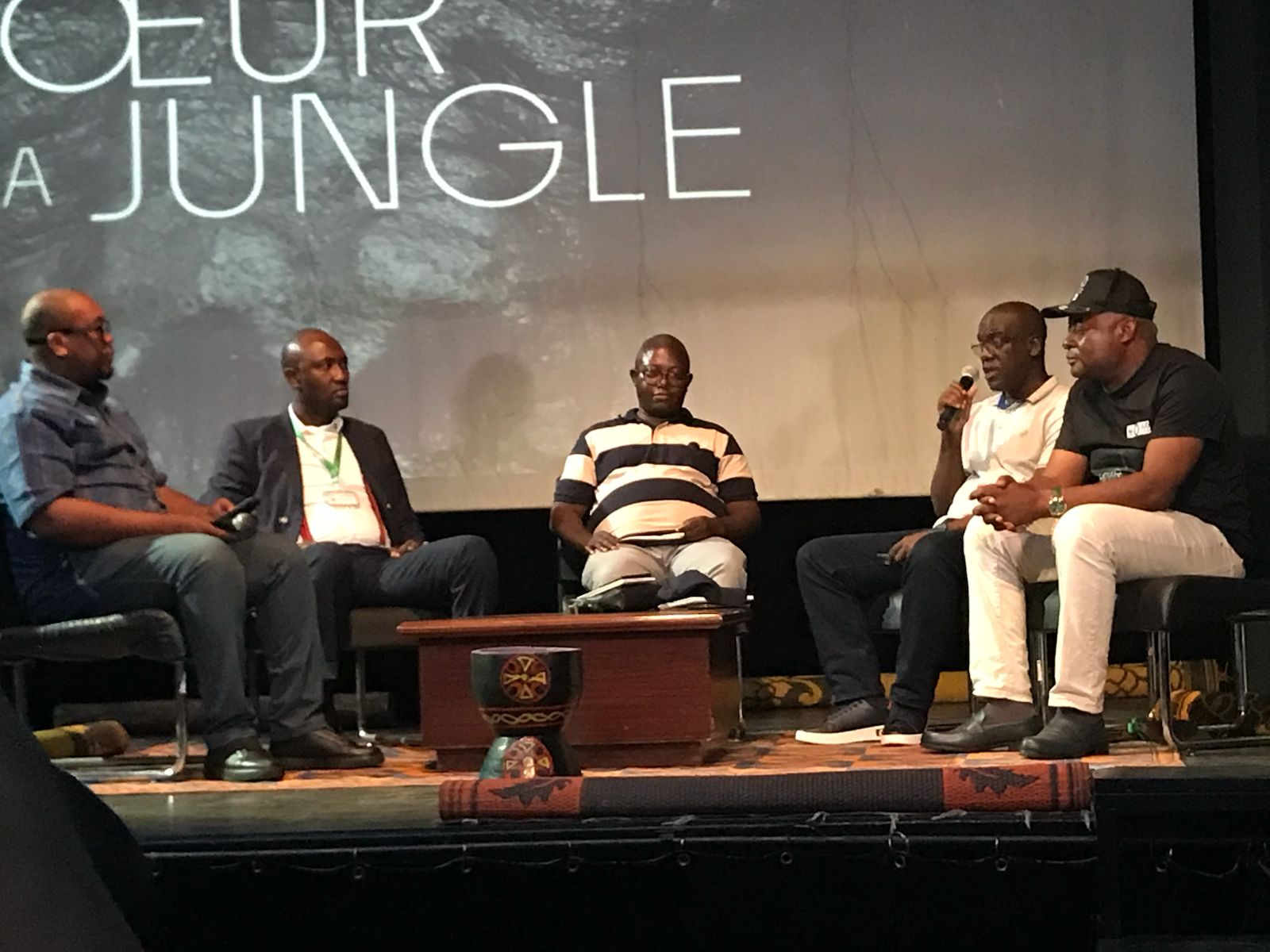
By Leocadia Bongben
A WWF film, ‘Au coeur de la jungle’ (in the heart of the jungle), shot in Cameroon and Gabon, plunges viewers into the heart of the Congo Basin forest, depicting the symbioses between man, the forest, and wildlife.
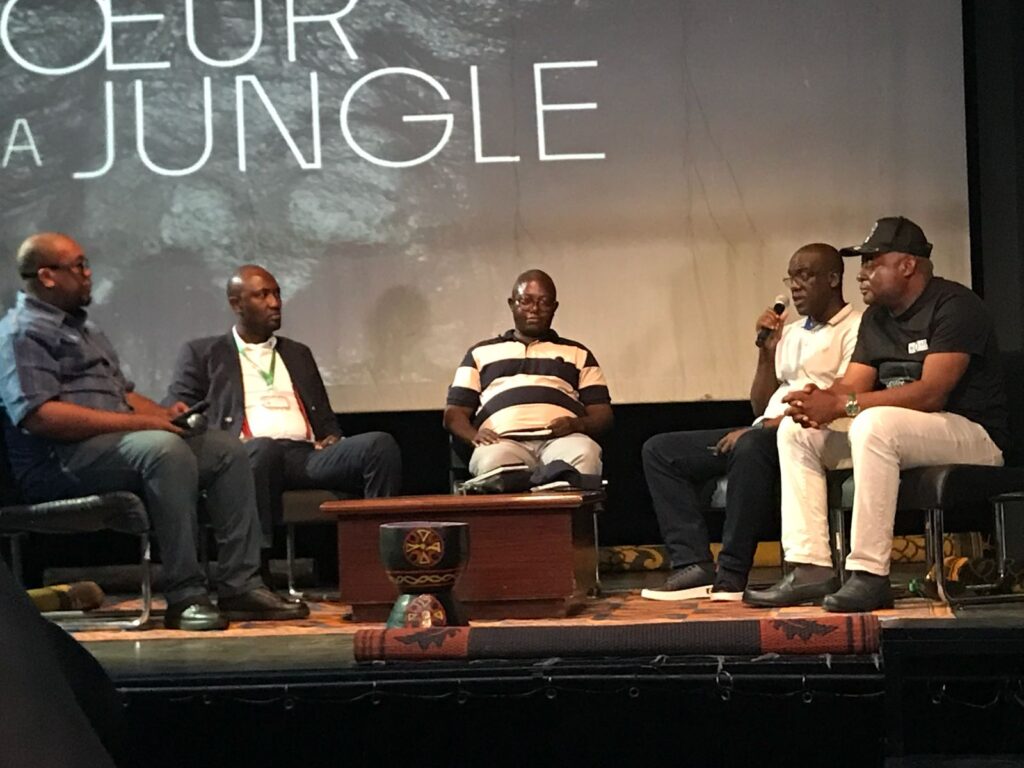
The film portrays the beauty of the forest with various animal species, including chimpanzees and elephants, as well as the vital function forests play in the local population’s survival, climate regulation, and the ability to produce food and medicine. It highlights the dangers to agriculture, the forest, climate change, and conflicts between humans and wildlife.
Fidelis Pegue Manga, who was in the production team, says, “We wanted to show that through wildlife we can generate income, through eco-tourism, and protect the animals better. The film reminds us of an essential truth, that conservation can only be sustainable with the implication of the local population.”
Alain Ononino, WWF Country director, reiterated, “The message is straightforward: understand the value of the forest, the need to preserve it, and the people therein. Above all, the movie illustrates the necessity of incorporating local communities in conservation policies and learning from their customs to support them.”
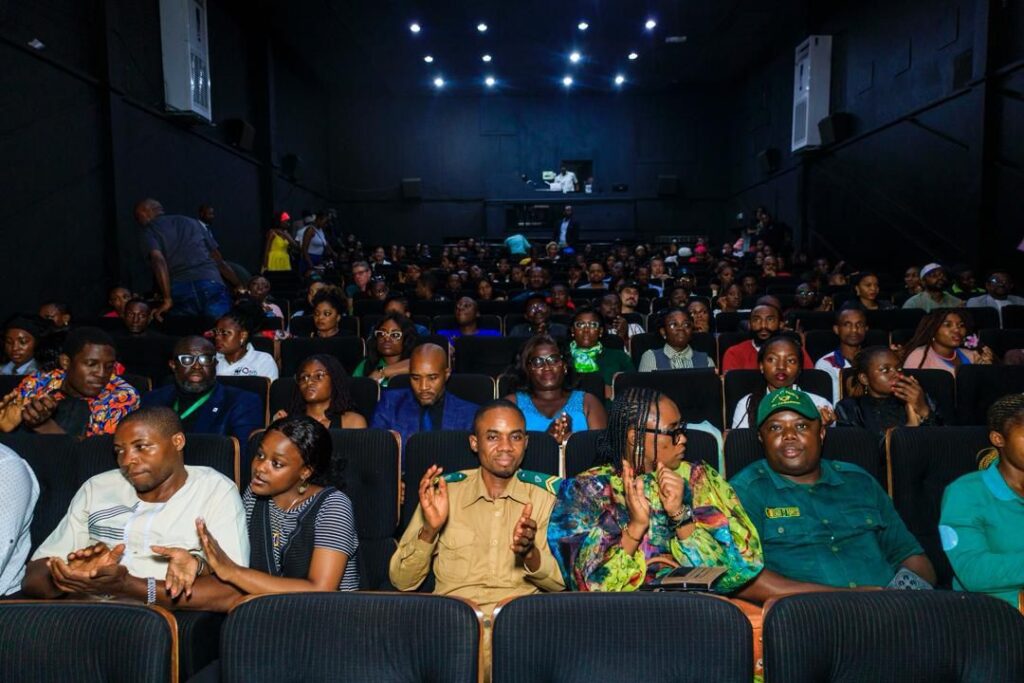
He adds, “The film is also a moment of sensitisation and a plea that majestic forests are in peril. It is important to show their beauty, to remind us of their fragility, a moment to put the media, civil society, to continue to relay this message, to preserve these forests.” WWF is convinced that a concerted action, which brings together the public authorities, the civil society, and the young people, can truly preserve the forests, Ononino stressed.
Beyond tonight’s screening, WWF created a moment of exchange, of inspiration, and perhaps today, new conservation methods coming on the heels of the screening on the 21st, last month, in Paris.
WWF Cameroon boss thanked Agence Francaise de Développement, AFD (French Development Agency), the film sponsor, and the French Institute of Cameroon for their collaboration.
Julie Calire, representing AFD, maintained that what is happening in Cameroon and Gabon has direct repercussions everywhere else, in Africa, Europe, and far beyond. “The preservation of these forests, of their biodiversity, their role in climate regulation, especially their ability to absorb carbon, these are issues that concern us all, wherever we live. It is in this spirit that the AFD group supported this initiative alongside many other partners here, even on the ground.”
She expressed the desire that the film inspires more conversations, but most importantly, solutions and commitments to conservation. “The future of these forests is at stake for the states, the local populations who live there, but also for all of us. It is a shared interest, for the planet, for the territories, and for our common future,” Julie Calire said.

According to Luc Evouna, Central Africa Coordinator of the Fight Against Wildlife Crimes, initiatives, like the Central African Forest Commission created in 2005 and the Sub-Regional Action Plan, which went into effect in 2022, to combat the illicit trade in wild species, exist alongside cross-border agreements on the management of regions like the Tridom between Cameroon, Gabon, and Congo that allow for the coordinated management of biological resources.
WWF works in remote areas where the context is very challenging, where people have to live in the forest for a long time with no access to basic commodities, electricity, water, and food, to support the Ministry of Wildlife and Forestry in addressing the poaching issue through the Zero Poaching approach. This is a slogan where we test a set of tools in a particular area to make sure there are no poaching incidents, Evouna said.
“We collaborate with the community in this manner, utilizing every piece of technology that the Wildlife Administration has at its disposal to conduct surveillance-related law enforcement operations. We employ trackers and offer them some basic services. In every location where WWF operates, there is a rural economy built on the work we do on the ground, which communities are utilizing to generate revenue,” Evouna reiterated.
He added that WWF is working with the Ministry of Forestry and Wildlife to train EcoGuards in respect of human rights, making all interventions human rights-friendly and complying with conventions at the global stage.