
By Leocadia Bongben
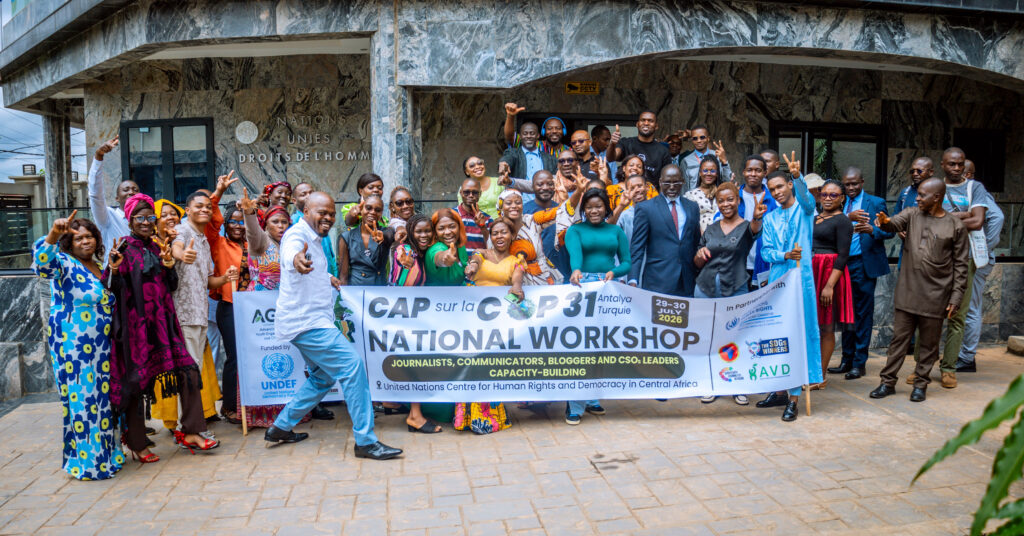
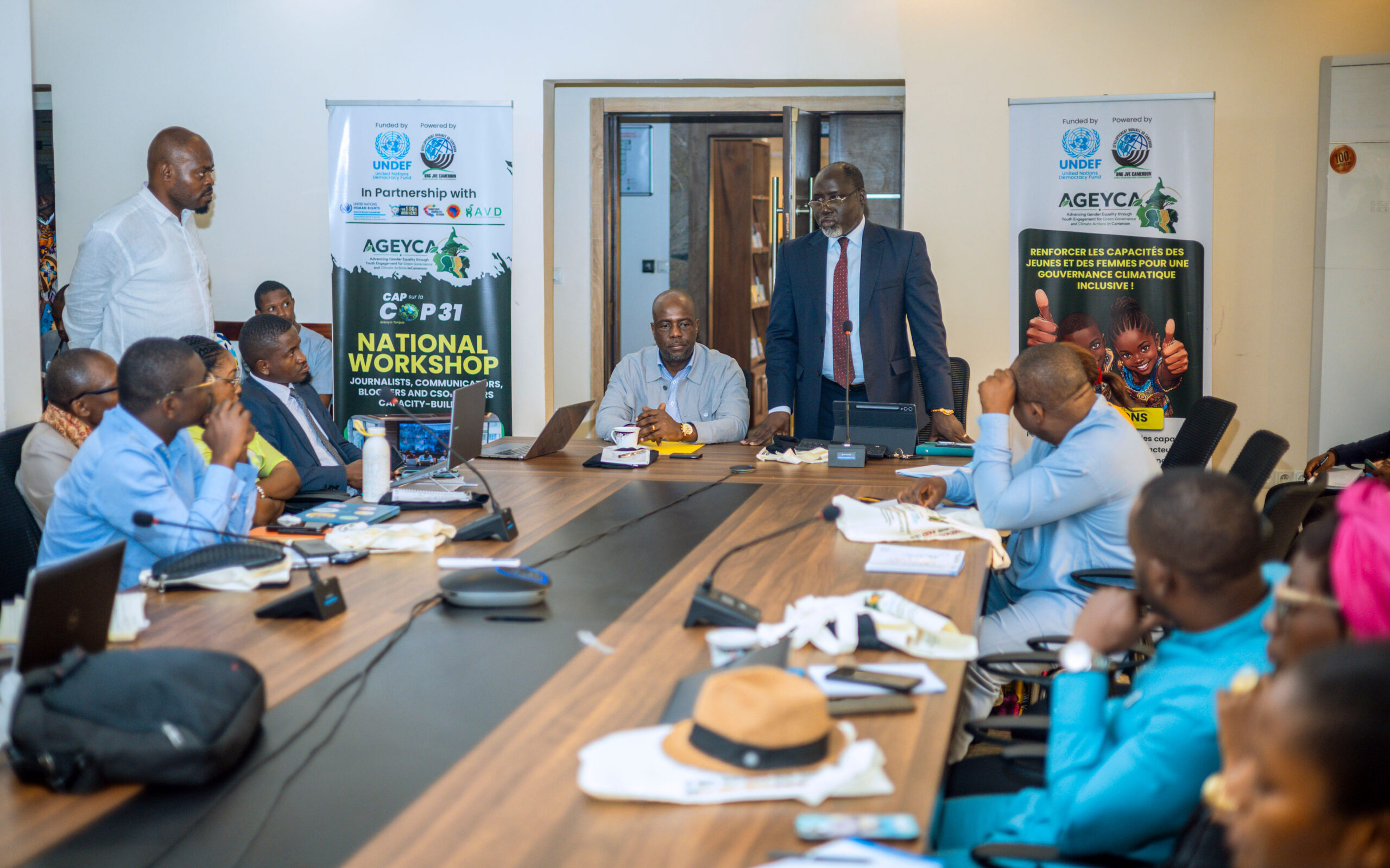
Cameroon is taking steps towards the regulation of its carbon market to ensure everyone is taken on board, experts have told journalists, bloggers, and communicators. The experts, following presentations, answered questions during a training for journalists on carbon mechanisms as part of preps for COP 31 to take place in Antalya, Turkey.
The carbon market is a trading system where countries and companies buy and sell carbon credits to reduce greenhouse gas emissions. One carbon credit equals the removal or reduction of one metric ton of carbon dioxide (or an equivalent greenhouse gas). It puts a price on pollution to reward clean action and penalize high emissions.
It should be noted that the Cameroon government seems to be at the center of attacks from NGOs; private and public partners claim that the government is holding the carbon market hostage. According to Robert Pismo, a member of the roster of experts, CCUNCCC, the government is making an effort; work is in progress.
Maxime Nguemadji Moussa, Technical Assistant at the Ministry of Environment and Protection of Nature and Sustainable Development, MINEPDED, said that there is a need to prepare the ground with a regulatory arsenal, understand who owns the carbon and how the funds will be partitioned, including how much gets to the communities, and take everyone on board before venturing into the carbon market space. So far, pilot projects have been unable to sequester as promised, and the reality in the field is discouraging, coupled with distrust among stakeholders.
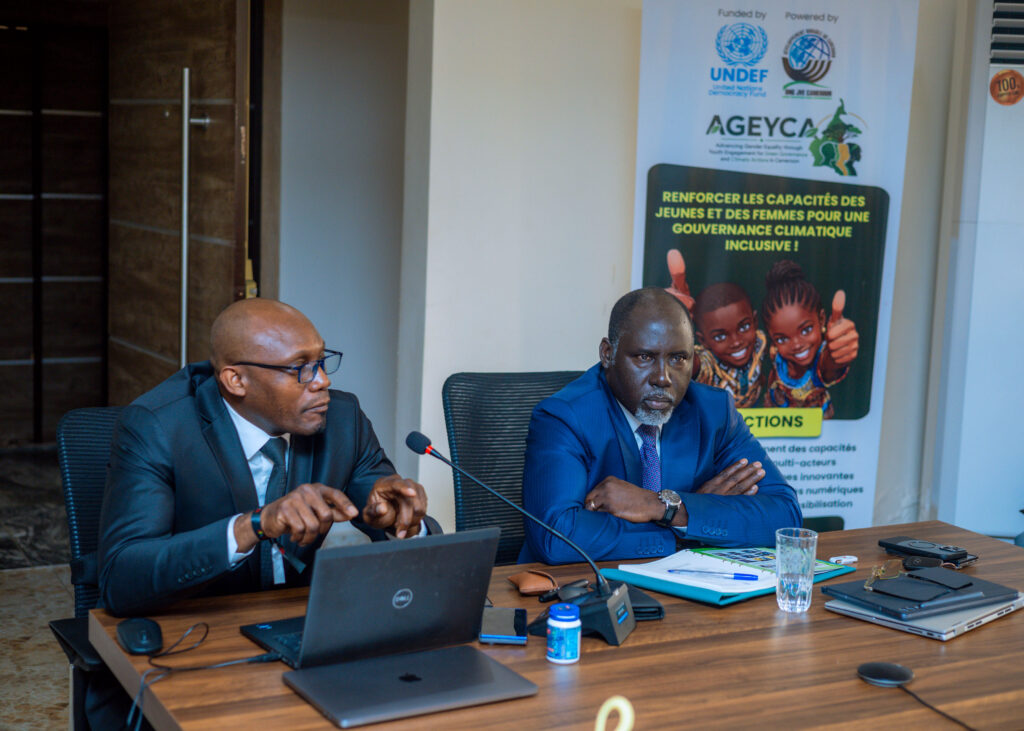
The new forestry law announced the carbon market, but there is a need for a framework that will tackle the climate law. Pilot projects defined national strategies and drew attention to the threats and opportunities. The challenge stems from the fact that the money allocated came from public aid, which does not generate any interest value in carbon because it is valued elsewhere.
The workshop was an opportunity for journalists to understand the link between the environment and human rights—climate justice, including equity, solidarity, reparation, inclusion, and respect for human rights. The need for the protection of affected communities, factoring in and documenting women and youths, and the role of the media in listening and documenting their realities.
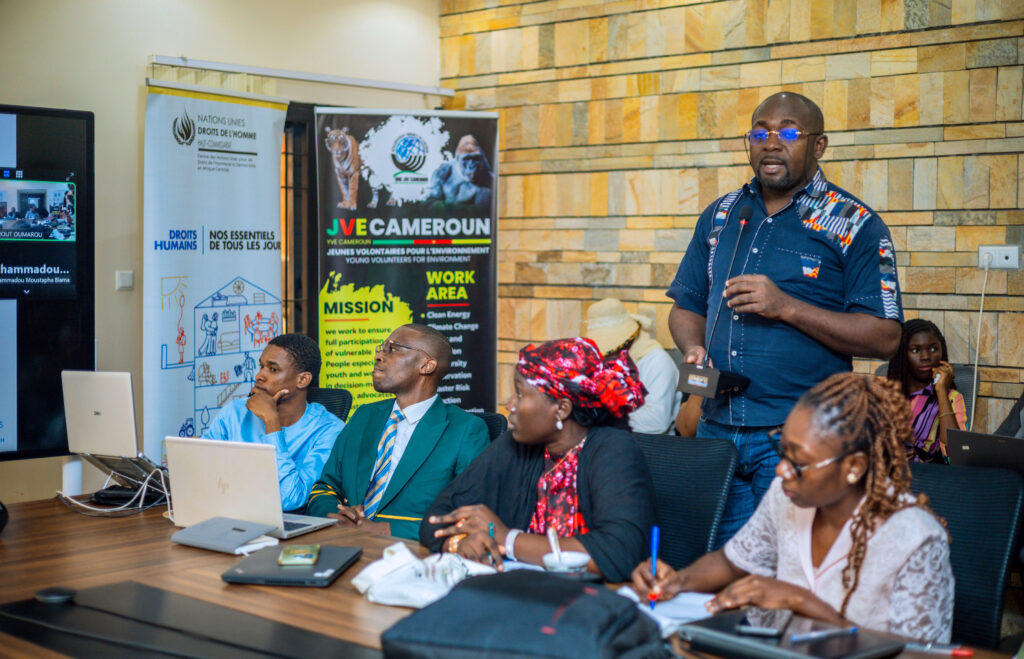
Speaking on the occasion, Timothee Kagombe, National Focal Point, CCNUCC, and GEIC, coordinator of the National CDN and AND Art. 6 AP, MINEPDED, explained the working mechanisms of the conventions of the United Nations on Climate Change. He said it was important to prepare journalists for COP 31. “We beefed up capacity and provided fresh information to fight disinformation, and it was important to help the journalists, who transfer knowledge and information to the communities. A journalist who is well prepared, well informed, and trained can really treat information better and make it easier for the community.”
According to Blondel Silenou, different delegations are preparing, technically and financially, to make an honourable participation at COP 31, and it is within this context that JVE and some partners decided to organise a workshop to strengthen the capacities of journalists, bloggers and communicators and young people.
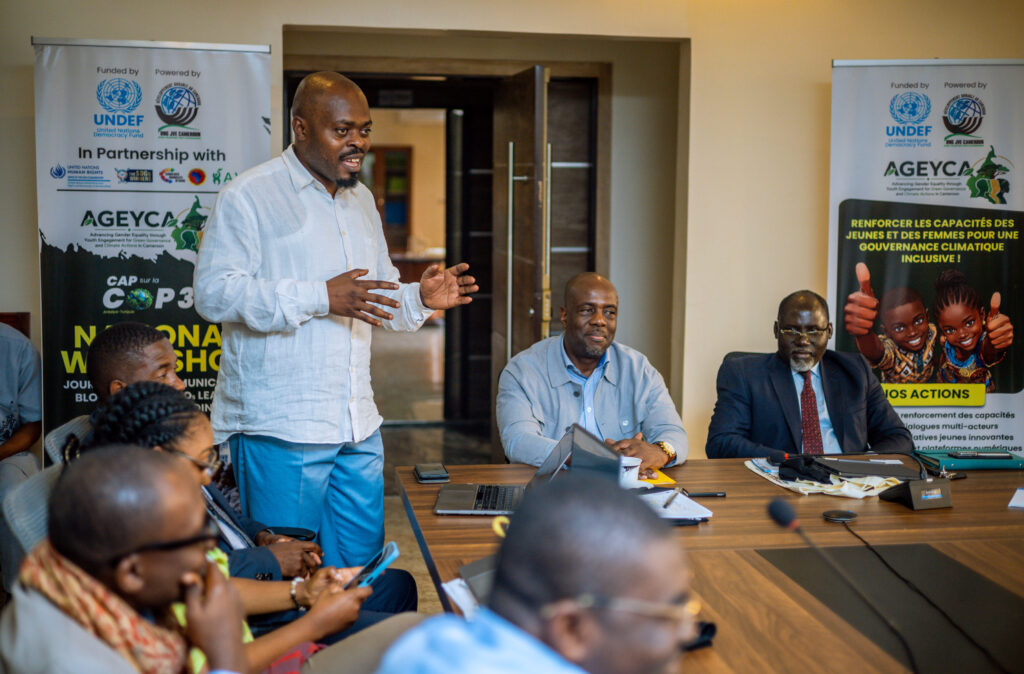
The Ministry of Environment, represented by the governmental focal point on climate change issues, supported JVE in strengthening the technical capacities of journalists on issues of climate governance, climate finance, transparency, and everything that is related to the different elements that will be discussed at COP31 in Antalya, Turkey.