

By Leocadia Bongben
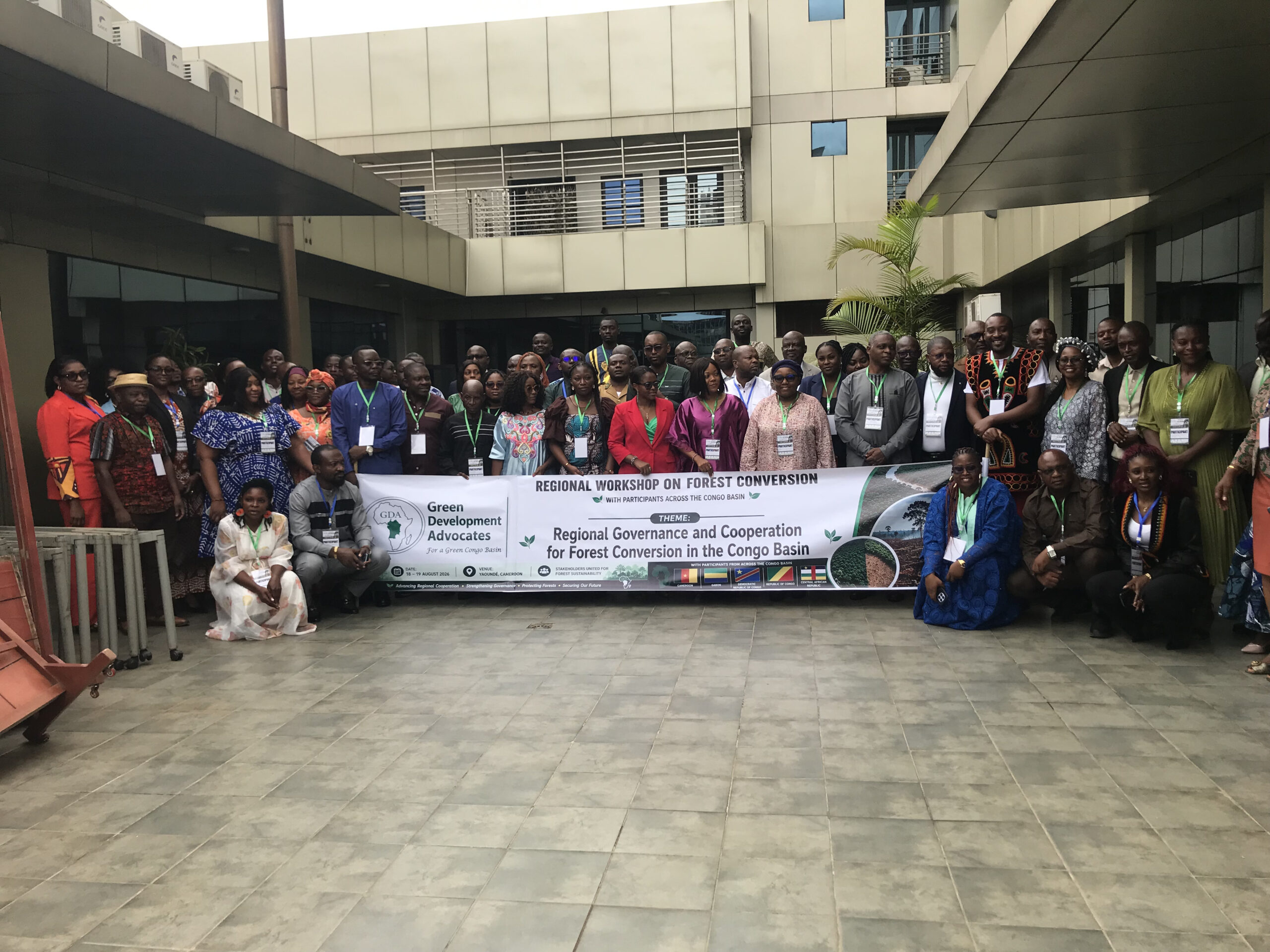
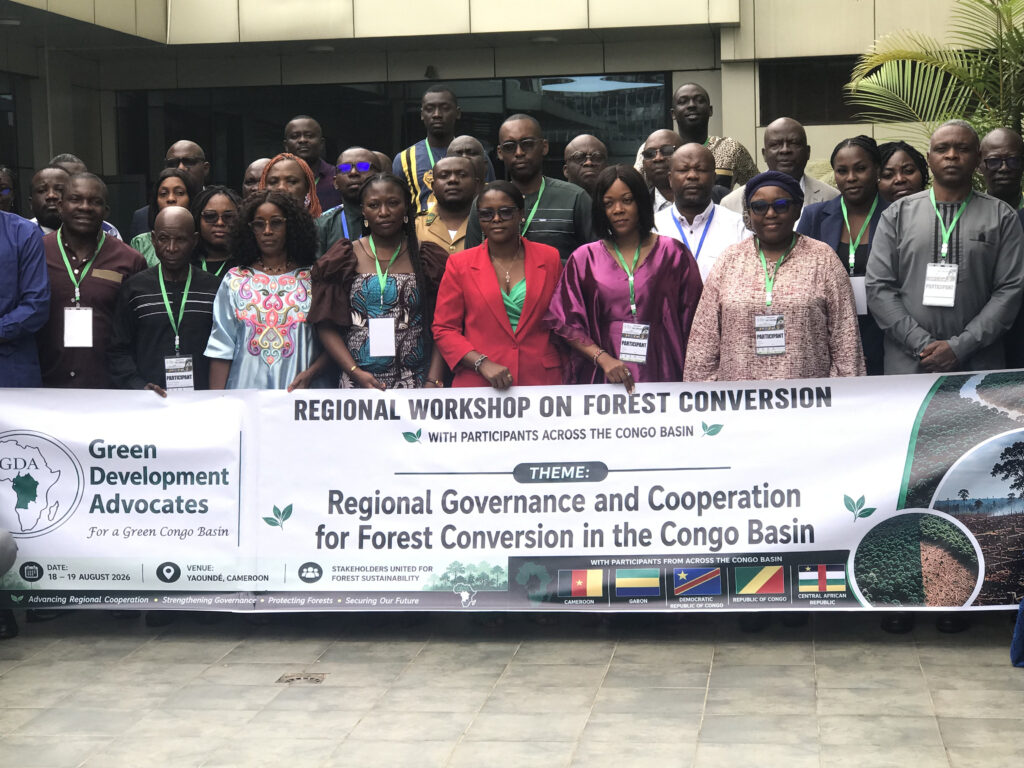
Participants at a two-day workshop on land conversion in the Congo Basin have agreed that preserving community rights in the forest conversion process is key. The two-day workshop was organised by Green Development Advocates, GDA, for countries of the Congo Basin – Cameroon, RDC, Gabon, RCA, and Congo-Brazzaville – located in forest areas converted for different uses, especially for agro-industries.
Forest conversion is a process that transforms a natural forest into a non-forest space where infrastructure projects are created. The Congo Basin covers over 300 million hectares of forest, home to numerous plant and animal species, and plays a vital role in regulating global climate, storing carbon, conserving biodiversity, and sustaining the lives of indigenous people, yet over the past few decades it has been under increasing pressure due to the conversion of forest land to other uses. A recent study estimates that between 1990 and 2020, the basin lost more than 352,000 km² of forest cover, representing approximately 8.5 per cent of its total area. Agricultural expansion, mining, infrastructure development, industrial logging and large-scale agro-industrial projects are among the main drivers of this conversion. This trend is leading to a gradual reduction in forest area, exacerbating land-use conflicts and causing ecosystem degradation, with significant consequences for biodiversity, the climate and local communities.
Forest conversion also raises major challenges in terms of sustainable development, compliance with the climate commitments of the countries of the Congo Basin, land governance and environmental justice. Faced with these challenges, governments, civil society organisations, technical and financial partners, and local communities are seeking to promote approaches that reconcile forest conservation, economic development and respect for the rights of communities dependent on natural resources.
It was against this backdrop that participants identified forest conversion drivers, explored challenges and opportunities and drafted a roadmap for priority actions and strategies to reduce conversion. It was an opportunity to drum up coordinated action, given that commitments made by the Central African states under the Paris Agreement of 2015 as well as the initiatives led by the Central African Forest Commission (COMIFAC) and the Economic Community of Central African States (ECCAS), the responses remain fragmented and insufficiently coordinated.
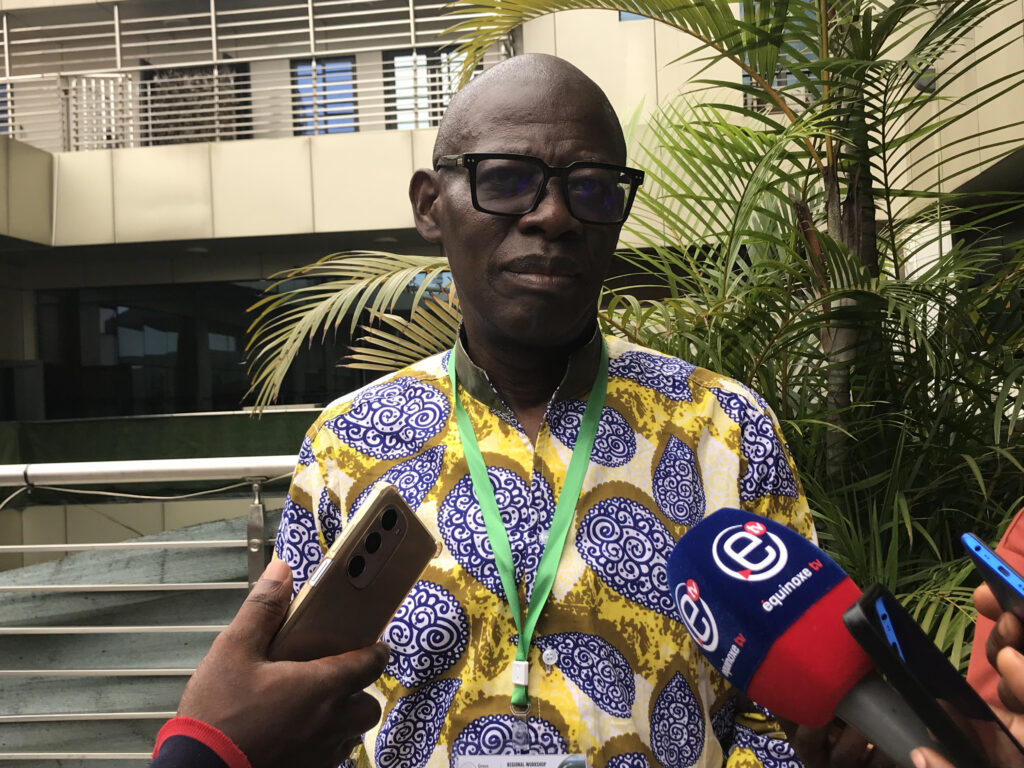
Speaking on the rights of communities that should be taken into account in the conversion process. Guy Moussele Diseke, president of the Bomassapo Association to promote culture and protect biodiversity, maintained that recognising indigenous lands and local communities is crucial. To him, the Central African region has the same ecosystem, people, problems, realities, and consumer products, and the forest represents everything for them: their pharmacy, bakery, and shop.
Consequently, by losing the forest, the lives of the populations are negatively affected. With forestry exploitation, the results are not encouraging because it has been observed that communities living adjacent to the forestry exploitation are more impoverished than the communities that are farther away.
The lives of the communities have changed due to forest conversion – the distances that the populations could go to hunt and fish are no longer the same; the quantities have diminished, and nutrition has been disturbed by forest conversion. In the specific case of the Republic of Congo, the country has a 65% forest area, and at least 94% of the forests have already been assigned to forest exploiters, mining, and agricultural operators. There is a superposition around the forest. And the space of the indigenous peoples remains a challenge. “There are areas where the local population can no longer access, whereas this is where they have their customs and sacred places, the tombs of the people destroyed by the exploitation of agriculture, forestry, and mining.” Against this backdrop, the workshop serves as an avenue to reflect on how to solve the issue of forest conversion.
In his inaugural lecture, William Mala, Acting Country Director and Senior Manager, Landscapes and Communities, at Rainforest Alliance, underscored the need for a balanced perspective – a positive and risky picture of forest conversion. “If we say that things are going badly, we lose something; we lose the perspective of political dialogue with the sector,” he said.
It is growth that creates added value and jobs, the macroeconomic indicator that every country dreams of. However, there is a need to integrate the sectors by recognising that all sectors are important in developing a country. This is followed by financing, which is transversal and found both through multilateral financing and through the public investment budget. In the case of Cameroon, he said the public investment budget must be indexed to green growth – climate change, restoration, sustainable investments, and sustainable commodities.
Celebrating the life of late GDA Founder and 15th anniversary of GDA
The workshop was also an opportunity to commemorate the passing of Dr DJEUKAM Robinson, GDA’s founder, and mark fifteen years today. Created in June 2011, GDA has had its ups and downs but remains committed to preserving the forests of the Congo Basin. To Diseke, “The GDA founder was a great brother who initiated us to forest preservation; a great master who led us towards the recognition of rights, especially in the protection of biodiversity; and an eminent jurist who really allowed us to work effectively. In his memory, we all needed to be present here.”
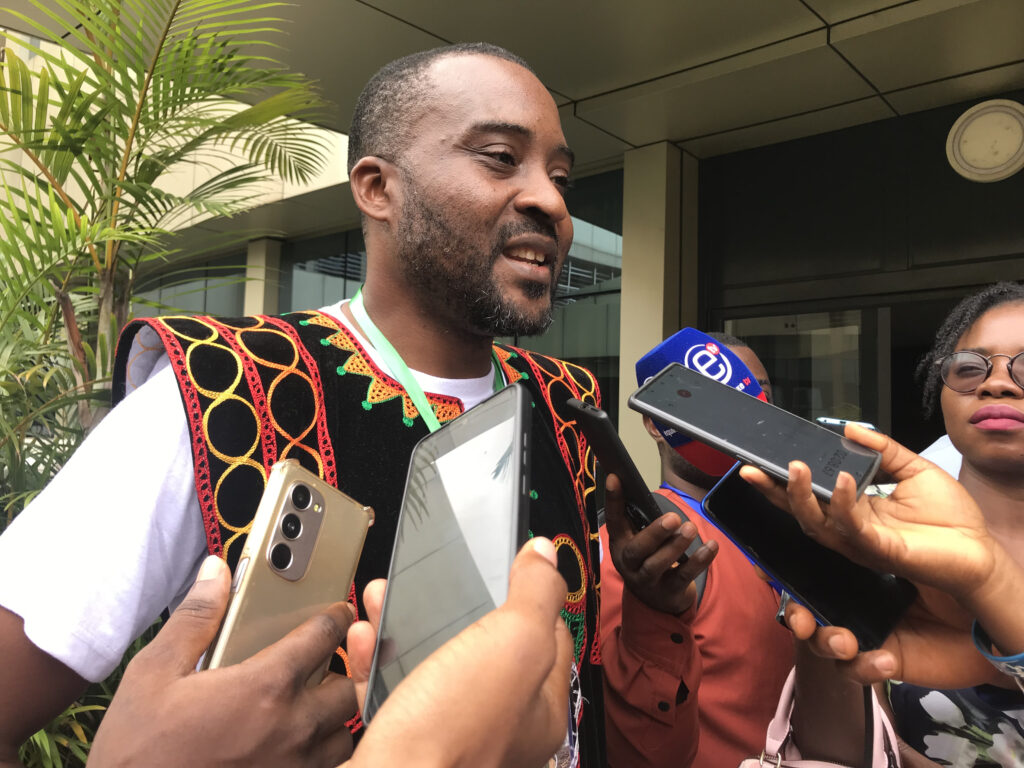
Celebrating fifteen years of GDA, the coordinator, Chagom Fokam Aristide, states, “Our vision is for an ever-greener Congo Basin. We promote sustainable development that takes into account the preservation of the forests but also the rights of communities, especially the rights of indigenous populations, notably the Baka, Bagheli, Bedan and Bakola, who live in the forest and whose practices do not impact the forest.”