
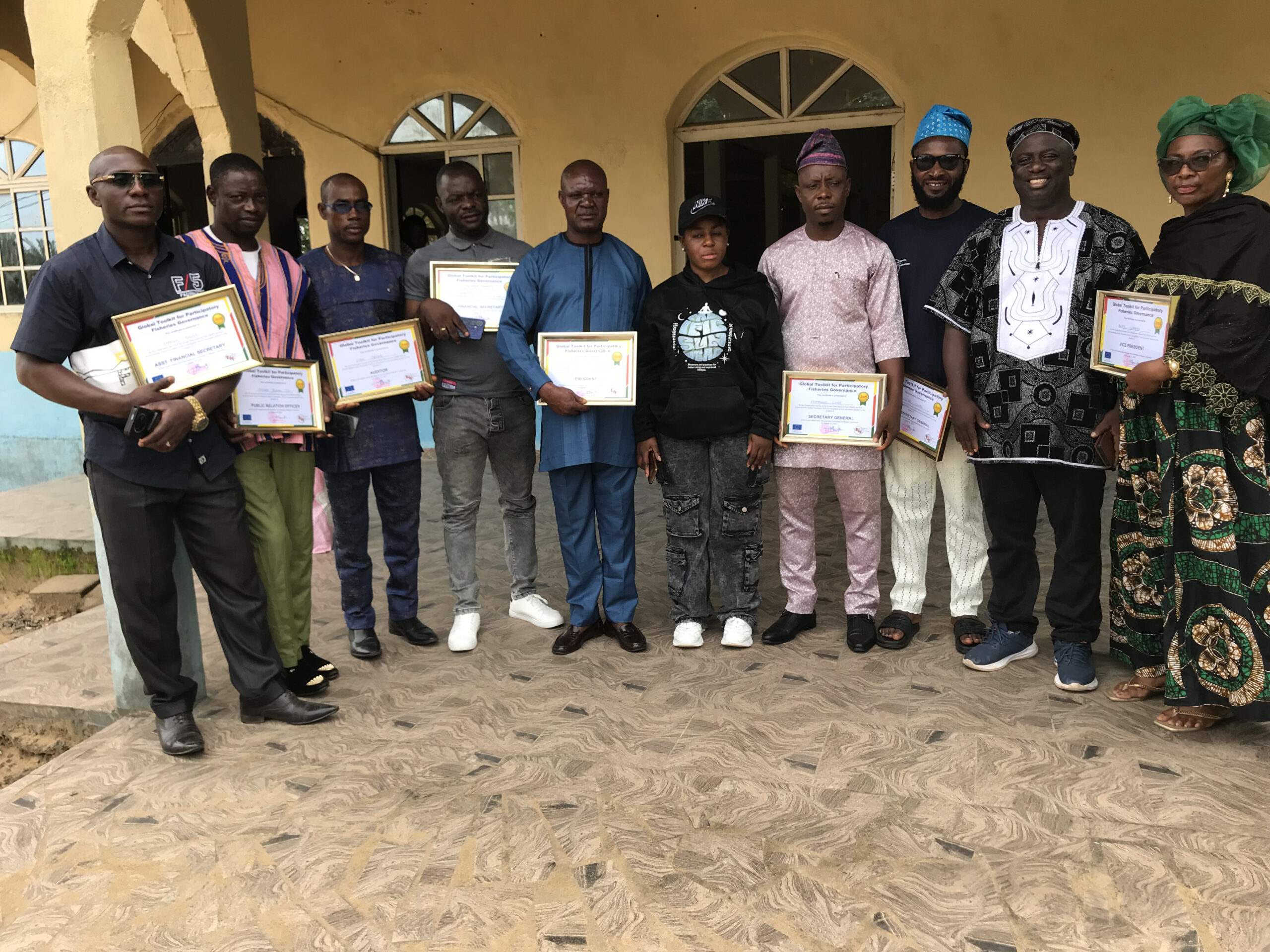
Twenty leaders from the Participatory Management Committee representing the coastal communities of Mbiako and Yoyo in Cameroon are taking part in a training course organised by the Environmental Justice Foundation (EJF) to strengthen local governance of the fisheries sector, combat illegal fishing, and help ensure sustainable livelihoods for future generations.
Illegal and destructive fishing practices continue to threaten fish stocks and the livelihoods of coastal communities like Mbiako and Yoyo in the Mouako Council of the Litoral region.
This training course, taking place from 24 to 25 June 2026, will beef up the knowledge and skills the leaders need to identify and combat illegal, unreported, and unregulated (IUU) fishing; promote sustainable fishing practices; and strengthen community-based management of local fishery resources.
The local committees were installed last year to work with the Douala-Edea National Park to combat IUU fishing and protect the biodiversity in the park.
According to Louis Fils Magmaen, a fisherman and chair of the Yoyo Community-Led Management Committee, “Our communities depend on healthy fisheries for their food, their livelihoods, and their future. Every day, we see the consequences of illegal fishing and declining catches. By strengthening local knowledge and leadership, we can help protect our fisheries, support fishermen who follow the rules, and secure the livelihoods of the next generation.”
Healthy fisheries are essential to food security, employment, and the economic resilience of Cameroon’s coastal communities, and by strengthening local leadership and raising awareness of fisheries regulations, this initiative aims to empower communities to play a greater role in protecting marine resources and to ensure that fisheries remain productive for future generations.
“When communities have the knowledge, tools, and authority needed to help manage their fisheries, they become the most effective guardians of the marine environment. Strengthening local leadership is essential to combating illegal fishing, protecting fish stocks, and ensuring sustainable livelihoods. The future of Cameroon’s fisheries depends on empowering the people who depend on them the most,” Steve Trent, CEO and founder of the Environmental Justice Foundation, said.
This training forms part of wider efforts to strengthen transparent, inclusive, and sustainable governance of the fisheries sector in Cameroon. By helping local communities to play an active role in the management of fishery resources, this initiative aims to improve compliance with fisheries regulations, reduce illegal fishing, and contribute to the conservation of marine ecosystems and coastal livelihoods.