

By Leocadia Bongben
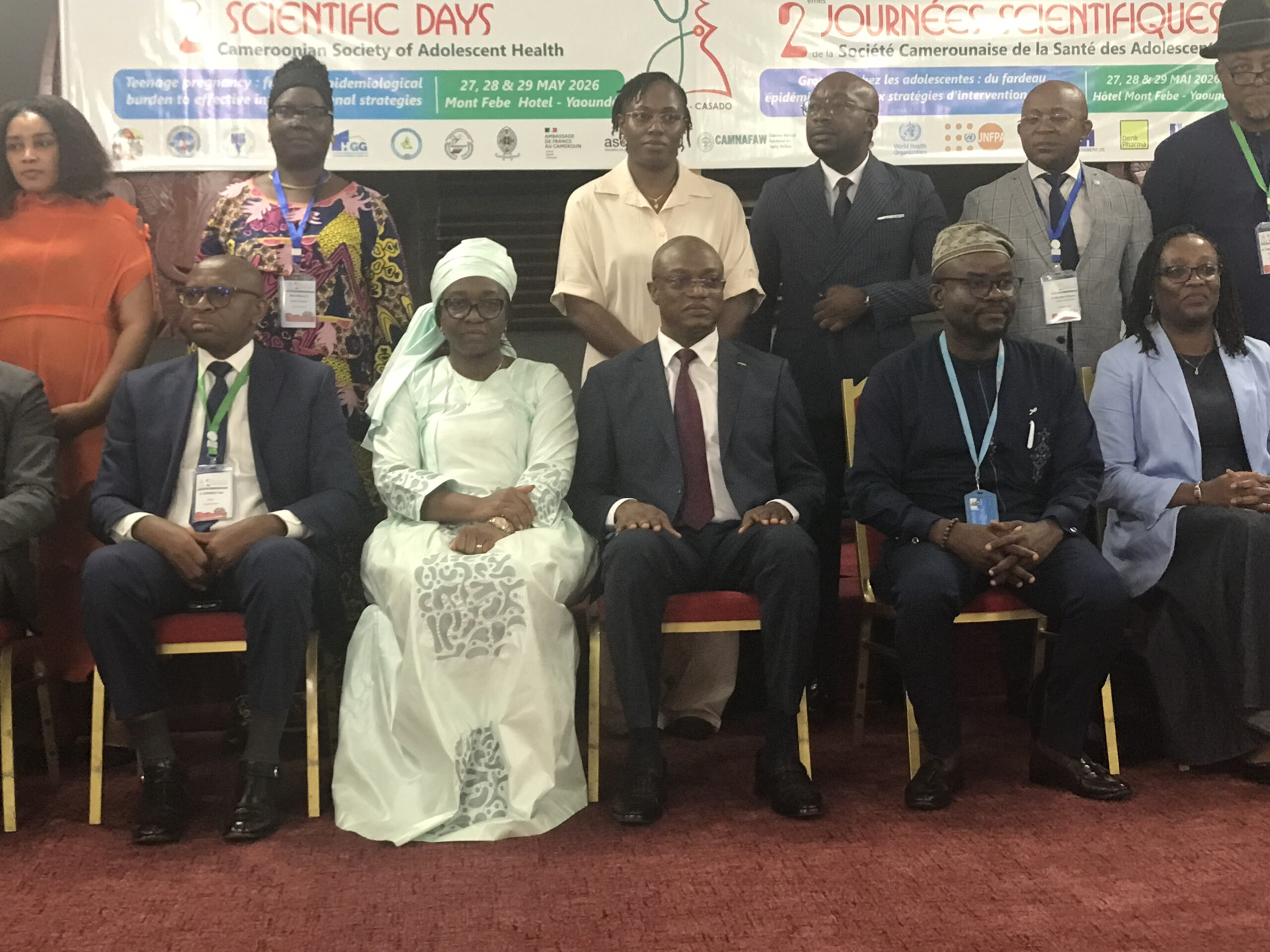
The Cameroonian Society of Adolescent Health, CASADO, conference that has just drawn the curtains in Yaoundé, indicates that teenage pregnancy is a public health problem. To overturn the situation, the World Health Organisation, WHO, urges the government to fully honour its international commitments in line with the provisions of the Maputo Protocol, which explicitly stipulates the rights of women and girls to reproductive health, protection against violence, and the elimination of legislative and social barriers. “Teenage health is essential to human rights and sexual and reproductive rights. Access to information and quality reproductive health services adapted to young people free from all stigmatisation constitutes a fundamental right,” Dr Alphonse Ngalame, WHO representative, tells the conference.
According to Ngalame, the rate of teenage pregnancies in Cameroon, which is the main indicator for teenage health, is around 122 for 1,000 teenagers, well above the regional average of Africa. In addition to early pregnancies, young people are subject to other serious epidemiological threats, with a prevalence disproportionate to sexually transmitted infections and HIV. Adolescent girls, from 15 to 19 years old, are three times more likely to be infected with HIV than boys of the same age.
There is growing exposure to gender-based violence, consumption of drugs, and chronic malnutrition, with epidemiological data translating to broken life trajectories, massive discolouration, and major risks of maternal mortality. The complications related to unwanted pregnancy are the leading cause of death in girls aged 15 to 19 years old.

It is against this backdrop that Professor Felix Essiben, CASADO president, maintains that the health of teenagers is enormous and sometimes a psychological and social challenge. “This age of life exposes young children to high-risk situations of vulnerability, particularly in the area of sexual and reproductive health. No adolescent girl should be the future to fight for her compromise and her dreams or be questioned by an early pregnancy that could be prevented,” Essiben states.
He stresses that protecting adolescent girls necessarily involves strengthening education on sexual and reproductive health, improving access to family planning services, and providing psychosocial support in response to the specific needs of young people. This means giving adolescent girls the information, opening their welcoming and sexual health services, and supporting families and communities in their role as caretakers. He says the Health, Maternal, Child, Sexual, and Reproductive Program, within the framework of the Universal Health Coordination, to strengthen health and reproductive services, promote health education, and integrate adapted services for young people, has led to a constant desire to make care more affordable, more efficient, and more inclusive for young people. However, by strengthening our reproductive health system, we also need to focus on social, economic, cultural, and ecological determinants, he adds.
To prevent the complex health burden faced by Cameroonian youth and adolescents, WHO firmly recommends a comprehensive, evidence-based package of interventions that can no longer be post-adopted, ensuring universal and equitable access to youth-friendly sexual and reproductive health services that guarantee privacy, confidentiality, and respect. WHO suggests strengthening multisectoral linkages, particularly between the health and educational sectors, to address the sociocultural determinants of adolescent health, requiring legal and policy adjustments fully in line with the Maputo Protocol.
The CASADO Scientific committee chose the theme ‘Pregnancy in Teenagers, from an epidemiological point of view, and an effective intervention strategy’ to respond to a major public health problem because pregnancies in teenagers are high-risk pregnancies, as they continue in an important way to aggravate the level of maternal mortality. Presentations and round tables with interesting debates marked the conference.
