

By Leocadia Bongben
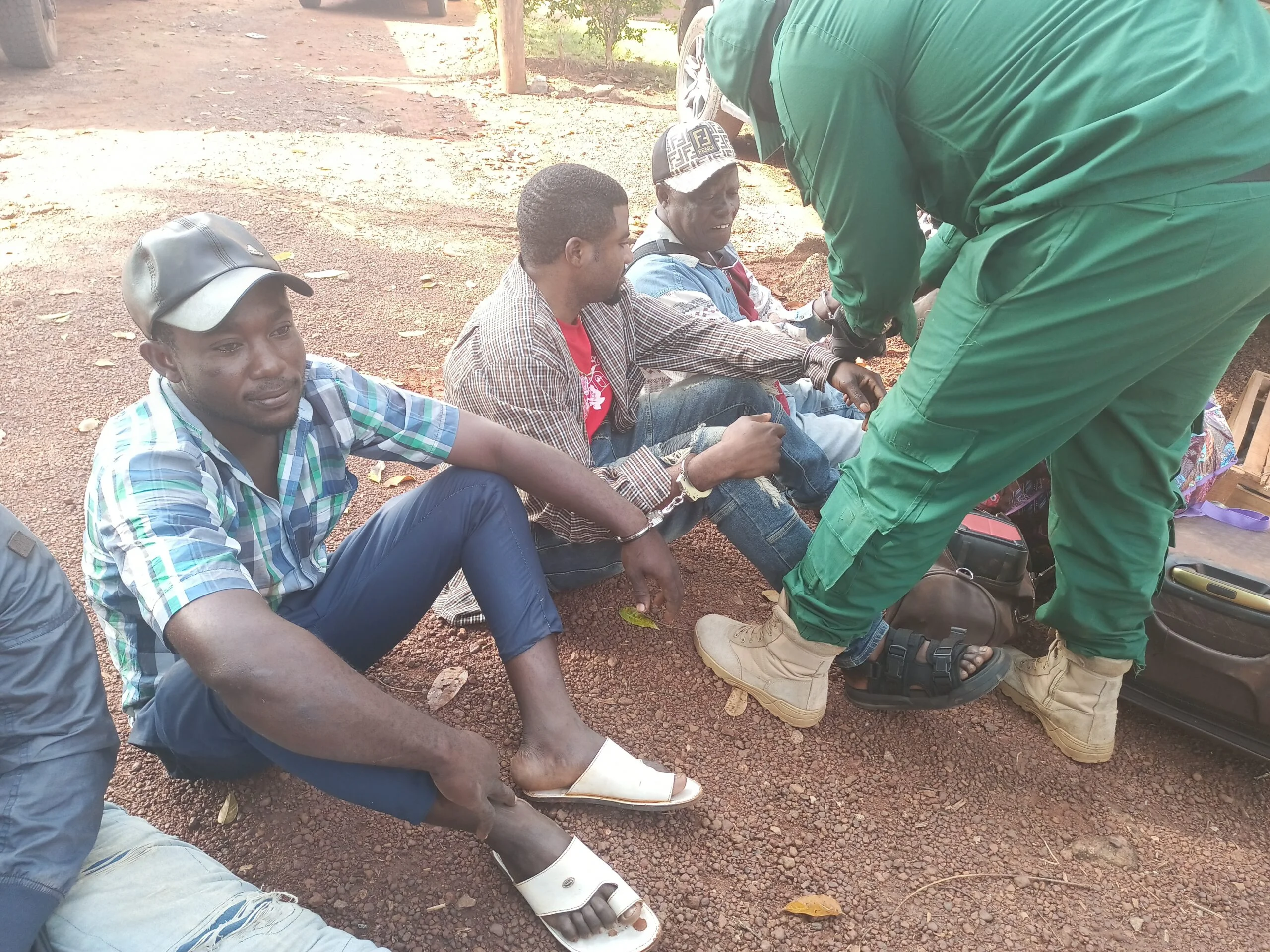
In 2020, NZIENGUI Clark and Mbina Marcelin were convicted of trespassing in the Gabon MOUKALABA Doudou National Park and possession of elephant tusks. Following investigations, they were sentenced to two and three years’ imprisonment; fines of FCFA 200,000 and 10,897,500, respectively; and suspended sentences, among others, according to Wildlex. Wildlex provided a source of information from which Brainforest gathered information on litigations between 2021 and 2022.
Gabon, Cameroon, and the Democratic Republic of Congo (DRC) are known for their exceptional biodiversity and extensive forest cover; however, they face a growing problem of forest and wildlife crime. Illegal logging and wildlife trafficking are on the rise, often driven by organized networks threatening the country’s ecosystems, its forestry economy, and its international commitments.
In Gabon, significant efforts have been made with the commitment from the judicial authorities and partners, yet a major challenge remains: the lack of qualitative and quantitative assessment of cases.
According to a Brainforest report, between 2021 and 2022, Gabon recorded 105 wildlife litigations, including 43 cases in the locality of Makokou, 3 cases originating from Wildlex, and 59 cases monitored by the judiciary. The number of forestry disputes rose from three in 2021 to six in 2022, for a total of nine cases handled by the local government, and five were settled out of court.
Olivier Meye Obiang, jurist and independent observatory expert in charge of forestry governance at Brainforest, who took part in the reporting, says, “It is important to inform the public on all the cases that have been judged, the judicial organizational chart, and its peculiarities—the establishment of a specialized chamber at the Court of First Instance and the criminal court at the Judicial Appeal Court to handle wildlife cases in Gabon.”
Articles 147 and 198 of Organic Law No. 008/2019 of July 5, 2019, establish specialized chambers within the Court of Appeals and the Court of First Instance of Libreville to adjudicate specific offenses, including trafficking in ivory and organized poaching, illegal exploitation of forestry resources, and trafficking in raw materials and other mineral substances. And Law No. 006/2020 of June 30, 2020, amending Law No. 042/2018 of July 5, 2019, the Gabonese penal code, in Articles 422 et seq., criminalizes the trafficking of plant species, thereby including timber trafficking.
Roger Darnel, Nguema Ondo, Magistrate/Prosecutor, an expert in environmental crimes, salutes the legal framework in Gabon, which has indeed improved and is adapted to prevention and the fight against environmental crimes, though there is a need to adapt to the new methods of crime. “Today, the sentences are 6 months, which are sentences that are reduced in the forestry code. But since 2019, the Gabonese state has understood the issues of environmental protection; the sentences of imprisonment and fines are heavier in the penal code than those we had in the forestry code,” Ondo states.
Despite the progress, the report decries the lack of transparency in the monitoring of forestry and wildlife litigation, the absence of a public registry of violations, difficulties in collecting monetary penalties imposed by the courts, prison sentences that lack a deterrent effect, and the absence of a legal requirement to systematically notify the prosecutor when a violation is detected.
The report recommended the creation of a public registry of forestry and wildlife violations and the establishment of an interagency mechanism to monitor the enforcement of court decisions, particularly fines; develop an ivory price index to facilitate its valuation during seizures; and introduce a legal requirement to report transactions to the prosecutor.
Documenting environmental litigations in Gabon, Cameroon, and the RDC
Environmental crimes—illicit trafficking in wildlife species, illegal logging, and illicit trade in natural resources, the fourth-largest form of organized crime worldwide—are surging, yet little information is available on the outcome, frequency, and effectiveness of environmental litigation initiated.
To contribute to the development of forestry and wildlife (environmental) litigation law as a means of addressing environmental damage, the NGO Field Legality Advisory Group (FLAG) initiated Forest and Wildlife Litigation, an initiative launched in Cameroon, extended to Gabon, and the DRC.
“We realized that there is a lot of action at the level of litigation, judicial decisions taken, and suspensions by the administrations in charge of the environment, but the real efficiency of these actions is not always perceived because there are problems such as the cover-up of pecuniary sanctions and financial sanctions not always being effective. Besides, limited analysis exists on litigations,” says Dr. Daniel Armel Owono Mbarga, a technical assistant at FLAG.

Though the report may not have been finalized, Cameroon, unlike Gabon and the DRC, has been publishing a report, which presents the situation, the number of contentions, and the cost for a given period, elaborated by the Ministry of Forestry and Wildlife.
To Mbarga, the registry of infractions allows FLAG to know what the Ministry of Forestry has gained financially through control; the cases are still pending in court, contractors are sanctioned, and there is an inability to recover the money. “FLAG is working on subsidiaries and going on the ground; we realized that there are cases that are ongoing or judged at the local level but that do not appear in the corresponding subsidiaries for the period,” he says.
The challenge of judging transboundary environmental crimes in the Congo Basin
Countries of the Congo Basin are confronted with cross-border environmental crimes, with the challenge of extradition ever present. TRAFFIC launched in 2016 the AFRICA-TWIX (Trade in Wildlife Information eXchange), an online tool developed to facilitate the exchange of information and cooperation between enforcement officers in central African countries. However, there is a need to improve in the ever-changing forms of crime in the area of digitalization.

Nguema maintains that a sub-regional legal framework has been adopted to fight economic and financial crimes, especially the issue of money laundering. Today, there is a CEMAC regulation that applies to all members of the CEMAC. So it’s an advantage, because there is a text that harmonizes the positions.
Concerning money laundering, all the countries of the CEMAC will apply the same provisions and the same sentences. Money laundering and environmental crimes are related; behind their traffic is the goal to make large sums of money, thus engaging in illegal activities to be able to make this money clean, while in reality, the basis on which they obtained this money is already illegal, the magistrate explains.
“We cannot talk about environmental crime without talking about money laundering, particularly about the CEMAC regulation, because wood trafficking is an infraction adjacent to money laundering,” states the legal expert.
Presenting the Brainforest report in Gabon during a workshop from March 24 to 27 provided an avenue to discuss environmental crimes in Gabon, Cameroon, and the DRC
