

By Leocadia Bongben
Cameroon-Yokadouma: Massive pangolin scale trafficking from Equatorial Guinea, Gabon, Congo, and the Central African Republic to Cameroon.
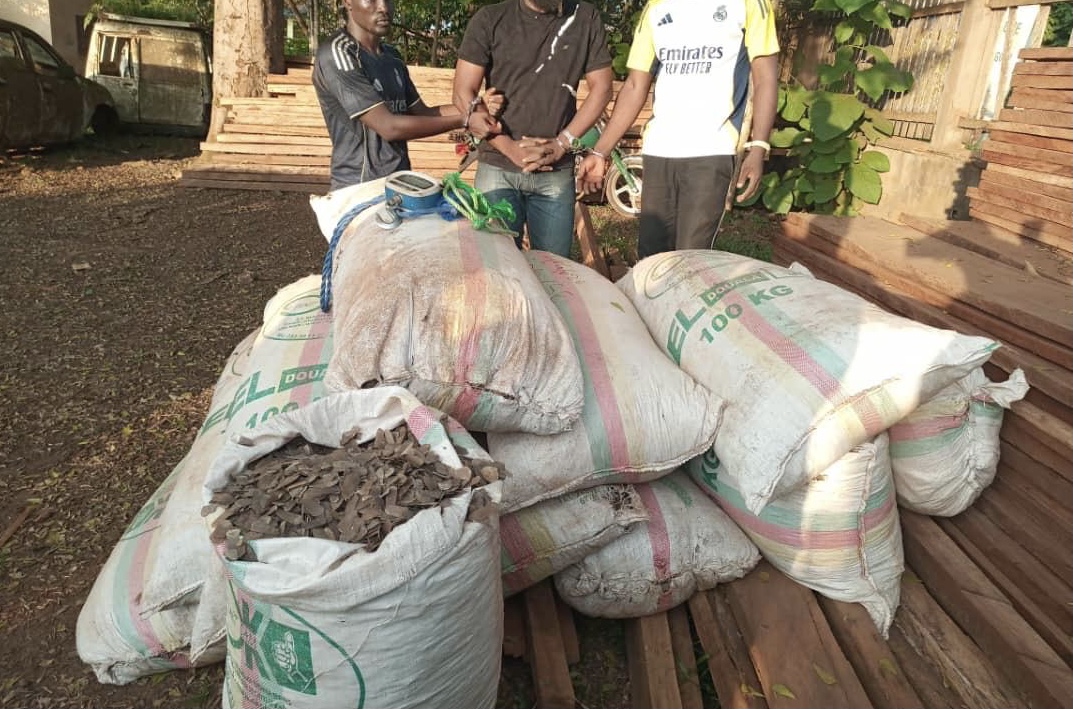
Three alleged traffickers who had almost 700 kg of pangolin scales hidden in a carpentry factory in the heart of Yokadouma were apprehended as part of a significant campaign against wildlife crime. Two motorcycles involved in the trafficking operation were equally confiscated. Ofir Drori, LAGA director, says, “To obtain the collected scales, an estimated 2300 pangolins had to be killed.”
With technical support from LAGA, a wildlife law enforcement support organisation, the Boumba and Ngoko Divisional Delegation of Forestry and Wildlife worked with the gendarmerie to make the arrest. After a protracted investigation, the suspects were captured during a raid while weighing bags of pangolin scales.
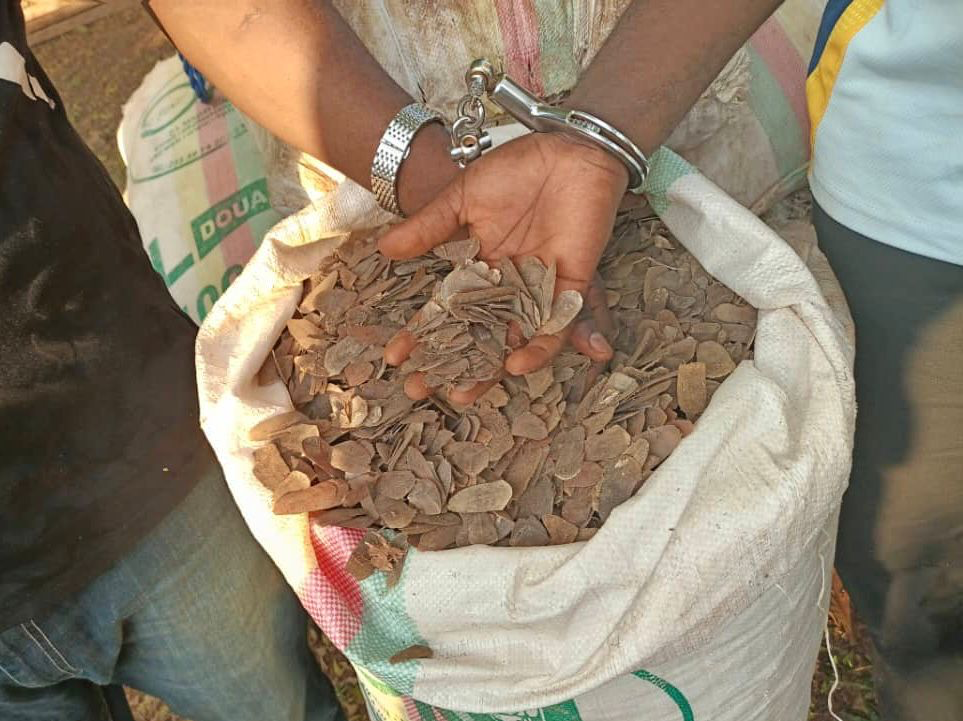
According to sources who wish to remain anonymous, the traffickers, who are experts in the trafficking of pangolin scales, had gathered and accumulated the scales over time while hiding their operations behind the sale of non-timber forest products. Their network covers some areas and neighbouring countries, such as Equatorial Guinea, Gabon, Congo, and the Central African Republic. The suspects transport large consignments concealed in pepper sacks (a scent-masking technique) to cities such as Bertoua, Douala, and Yaoundé.
The pangolin massacre has been condemned by the Ministry of Forestry and Wildlife, which has reiterated its resolve to stop the growing pangolin scale trade. To combat wildlife crime, the ministry emphasised the significance of working together with LAGA and other partners.
Three totally protected pangolin species can be found in Cameroon: the gigantic, black-bellied, and white-bellied pangolins. According to the 2024 wildlife law, possessing or trafficking pangolin scales is punishable by up to 20 years in prison. While the scales are trafficked worldwide, primarily to China and Southeast Asia, pangolins are eaten locally as bushmeat.