

By Leocadia Bongben
Scientists say Central African countries need to mobilise internal resources to finance climate change-related issues. This is one of the takeaways from the publication ‘The state of the Congo Basin Forest in 2025: The implementation of International Conventions on the Environment and Forest’, presented to journalists in Yaoundé ahead of the official launch and conference of parliamentarians on science, environmental governance and climate financing in Central Africa. The conference which opens today is an opportunity to take into account scientific results, fundamental in forest management.
In addition to financing, scientists say it is important to carry out adaptation that is more favourable to the local population. The need to look inward may be linked to the scientific results clearly indicating that Central Africa does not have enough international funding because there is probably still a need to better organise to speak with one voice. The reason for holding the parliamentary conference.
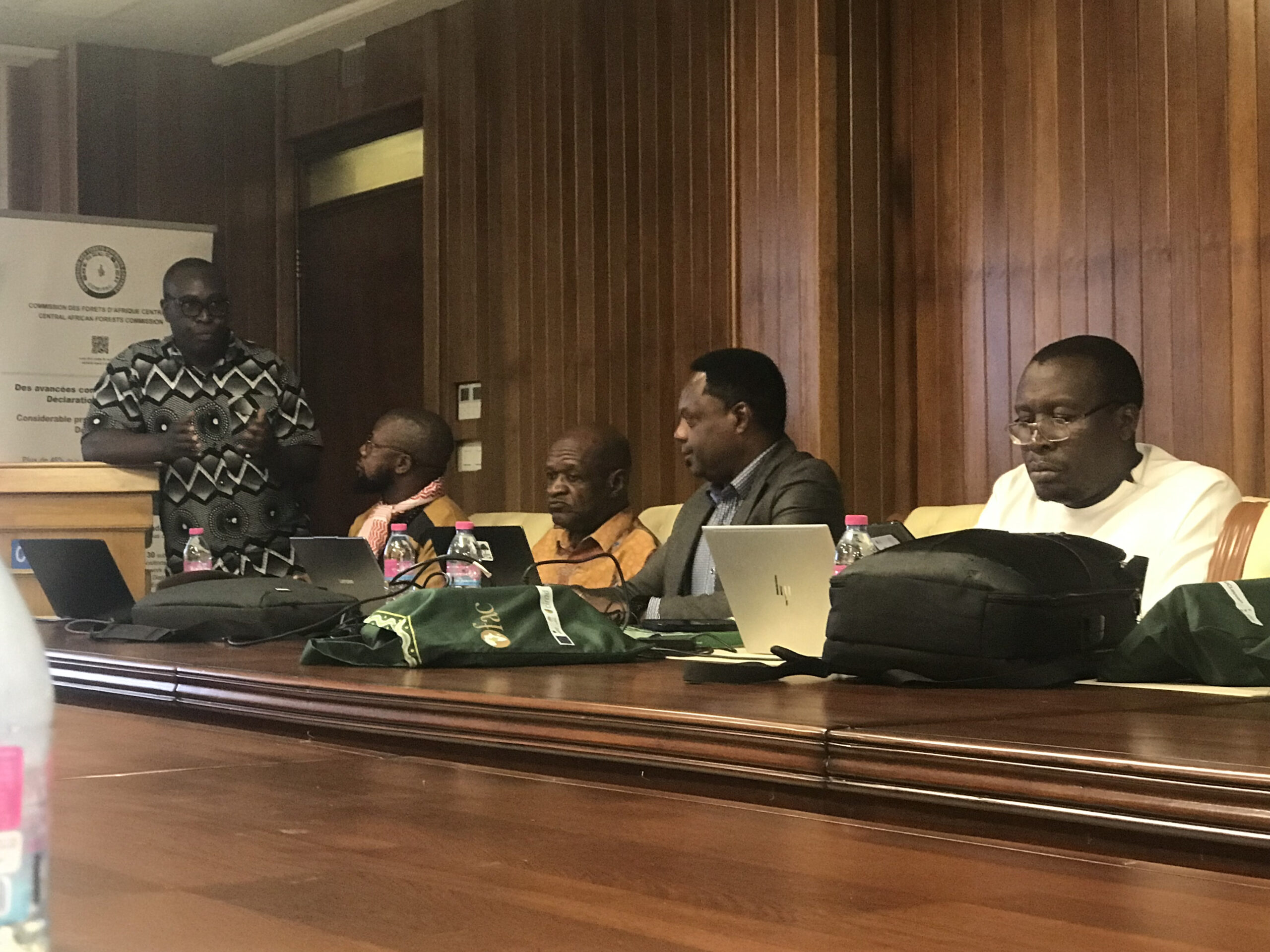
Richard Eba’a Atyi, the lead author, presenting the synopsis of the publication during a presser at the COMIFAC conference hall in Yaoundé on September 21, said the objective of the publication is to follow the evolution of the forest resources of Central Africa and their environmental management. “Periodically, we present the evolution of the forest cover, mirroring the management, the evolution of the texts, and the governance that surrounds the management of the forest ecosystems of Central Africa,” Eba’a Ayti stated.
The book analyses four agreements: international and regional conventions, the UN Conventions on Climate Change, on biodiversity, and on desertification, and the Paris Agreement in 2015. The Paris Agreement is the result of all prior discussion agreements on the premise that if life is to be possible on the planet Earth, the 2C emission threshold should not be attained in the world. This agreement goes further to indicate that there is a need to maintain the world emissions level at 1.5°C. Developed countries have to finance climate change to help countries that rely on their biodiversity adapt to climate change. The second major set of agreements that are related to international trade and biodiversity resources. The regional agreements include conservation and the sustainable management of forests in Central Africa, wildlife conservation, and a subregional agreement on forest control. The last set is human rights of forest people and cultural patrimony, guided by agreements such as the UNESCO convention, and pollution, with specific agreements especially on plastic.
According to Abdon Owono, Senior Scientist at Landscape Alliance and co-author of the book, following an analysis of the level of implementation of the agreements, efforts are being made, but there is still a long way to go. He maintained that deforestation is not increasing in the Congo Basin compared to other regions but cautioned on the need to take advantage of restoration to improve. “Agriculture is contributing, unfortunately, to deforestation, so people need to plant non-timber forest products and medicinal plants,” he suggested.
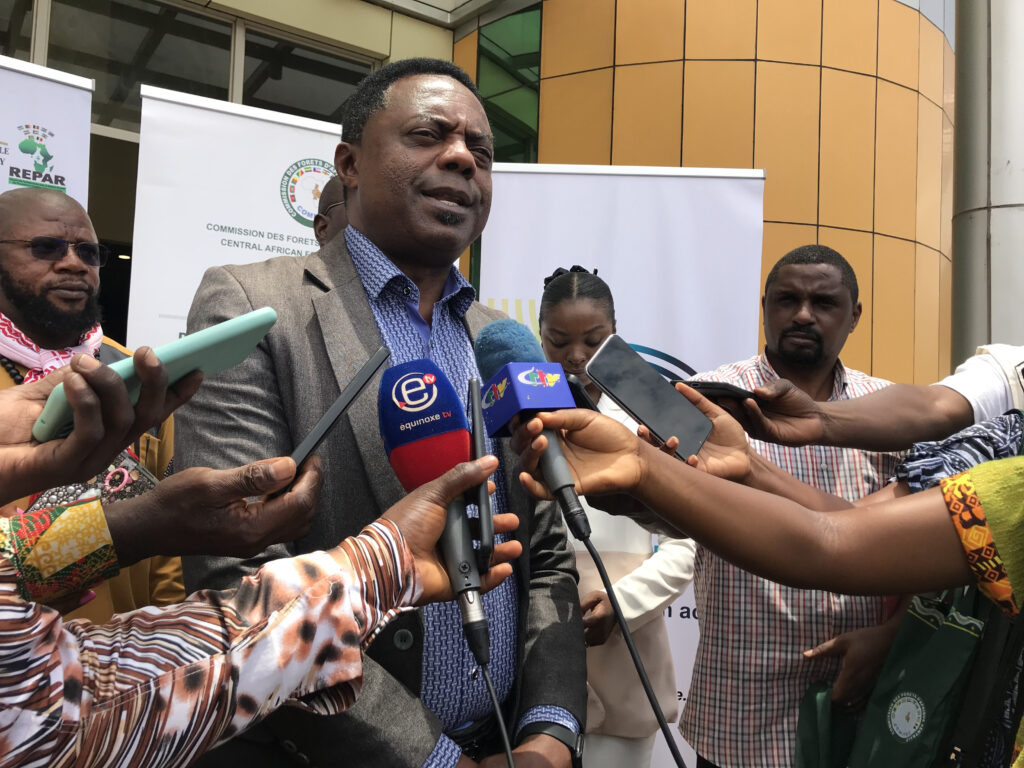
It should be recalled that the heads of state of Central Africa, in 1999, decided to set up a convergence framework for the management of Central African forests. The framework led to the creation of the Central African Forest Commission (COMIFAC) through a treaty in 2005. The Observatory of Central African Forests is the technical body of COMIFAC. Through this body, research is carried out so that politically clear decisions are made on forest management.
COMIFAC is organising the conference in collaboration with the parliamentary network for the sustainable management of Central African forest ecosystems and with technical and financial partners; taking into account scientific results in forest management is fundamental.
The State of the Congo Basin Forest 2025: an opportunity for journalists
To ensure a better grasp of the key themes and challenges proposed in the State of the Central African Forest 2025, a competition for journalists has been launched. Journalists have one month to produce articles that could be selected for the award. The Grand Prize winner will be invited to attend a conference to learn more about the Congo Basin forest, among others. Articles can be in different formats, and individuals or groups of journalists can collaborate to produce an article. According to Meryline Ojong, Landscape Alliance Communication Director, more details on the submission platform and other details will be provided later.